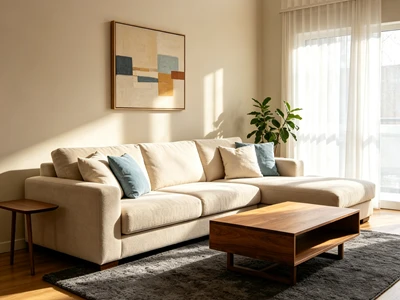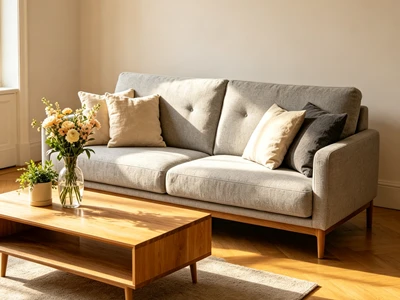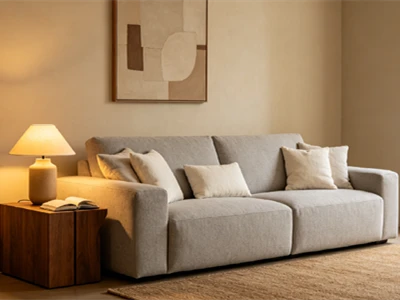

Sofa upholstery materials include various cotton, linen, polyester, wool, and synthetic fiber fabrics with twill weave and napped surfaces, as well as artificial leather and various thin leathers (commonly known as genuine leather), catering to diverse preferences.
Furthermore, the color of the upholstery can be matched with the color scheme of the furniture in the home. If the upholstery has a pattern, the pattern should generally be complete, symmetrical, and coordinated vertically. Seams should be aligned, curves should transition smoothly, and colors should be basically consistent without significant color differences. There should be no stains, scratches, or other marks (such as obvious skipped stitches or knots). Stitching should be crisp and straight. If genuine or artificial leather is used, check for blade marks, punctures, or any artificial or manufacturing creases. When touched and rubbed, it should feel soft and smooth, and there should be no color bleeding when wiped with a dry or damp cloth. Press down and back on the seat and backrest with your hands; the cover should spring back instantly after you release your pressure. When you roll and squeeze it towards the center with both hands, there should be no noticeable undulations.
In short, regardless of the cover material, it should be taut. No matter how you squeeze and roll it, it should not feel loose. Otherwise, it will soon loosen and lose its good condition, affecting the comfort of sitting on it. The same requirements should be applied to the soft, thin cushions used on sofas and chairs.