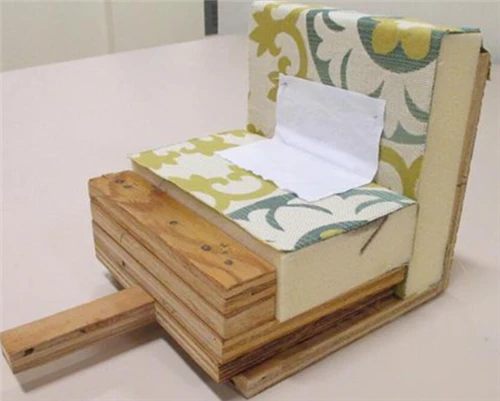

Gigixie brings 17 years of hands-on experience in sofa manufacturing and international furniture trade. Her expertise shapes every stage of order planning, regulatory compliance, and cross‑border buyer‑factory collaboration. She specializes in OEM and ODM upholstery projects, structural sofa design, packaging optimization, and bulk order risk mitigation for global furniture wholesalers, importers and hospitality procurement teams. She regularly shares practical sourcing guidance to help buyers avoid costly dimension, terminology and quality-control pitfalls.
Introduction
A sofa's seat cushion layout can look like a minor design decision on a product specification sheet. For furniture wholesalers, importers, and hospitality procurement teams, however, the choice affects more than appearance. It influences how customers perceive seating capacity, how a factory divides and supports the seat deck, how replacement cushions are managed, and how a finished model performs in a retail or commercial environment. This guide examines the practical differences between two- and three-cushion configurations, including construction, production planning, maintenance exposure, packaging, and project suitability. It also provides a framework for a wholesale 2 cushion sofa vs 3 cushion sofa comparison , so buyers can evaluate quotations on a like-for-like basis instead of selecting a layout simply because it looks more familiar. The goal is to help purchasing teams choose a configuration that supports sell-through, serviceability, and consistent bulk-order quality.
1. Core Difference Between 2 or 3 cushion sofas for Commercial Sourcing
The visible difference is straightforward: a two-cushion sofa divides the seating surface into two main cushions, while a three-cushion sofa divides it into three. The commercial implications are less straightforward because cushion count does not automatically determine seat capacity, comfort, durability, or overall quality.
A three-cushion sofa is not necessarily wider than a two-cushion sofa. A factory can produce both configurations using the same overall frame width, changing the cushion dimensions and sometimes the center support arrangement. Likewise, a two-cushion sofa does not automatically have fewer seating positions. A wide two-cushion model may accommodate three people, while a narrow three-cushion model may feel restrictive.
For sourcing purposes, the more useful question is how the layout divides the seating surface and how that division interacts with the frame, support system, foam specification, upholstery pattern, and intended user group.
Cushion count changes the seating experience
A two-cushion layout generally creates two larger seating zones. This can give a sofa a broad, relatively uninterrupted appearance. It may suit contemporary retail collections, apartment-scale furniture programs, and designs where a simple visual line is important.
A three-cushion layout creates more clearly defined seating positions. The center seam can help communicate a conventional three-seat arrangement to shoppers and project specifiers. It can also make it easier to identify a single cushion as a replacement component, provided the cushions are designed as interchangeable parts.
Neither layout is automatically more comfortable. Comfort depends on seat depth, usable seat width, foam construction, suspension, cushion thickness, upholstery tension, and the relationship between the seat and back. A cushion that is too wide may allow greater movement or uneven compression, depending on its construction. A narrower cushion may provide a more defined seating zone, but it can also create additional seams and edges that require careful pattern matching and sewing.
The buyer should therefore request a complete seat construction description rather than accepting cushion count as a proxy for quality.
What changes beneath the upholstery?
The most important sourcing distinction is often hidden below the cushions.
A sofa seat may use webbing, sinuous springs, a platform deck, or another engineered support arrangement. The support system must be designed for the actual seat span and intended loading conditions. When a factory changes a model from two cushions to three, it should confirm whether the frame and support structure remain unchanged or whether the revised layout requires different internal support.
For example, a wide two-cushion configuration may create two large foam units across a broad seating area. If the seat deck is not adequately supported, the cushions may show uneven compression or a noticeable difference in feel between the center and outer seating zones. A three-cushion layout may divide the seating surface into smaller units, but it does not correct an inadequate frame or weak suspension.
Buyers should ask the supplier to identify:
The type of seat support system and its attachment method.
Whether the frame includes a center rail or other reinforcement.
The foam type, density, thickness, and construction for each cushion.
Whether the cushions are reversible, one-sided, or fixed in position.
Whether cushion covers are removable and whether replacement covers can be ordered separately.
Whether the center and outer cushions use the same foam specification.
These details matter because two sofas with the same external dimensions and cushion count can have very different construction quality.
Comparison table: design and construction implications
|
Evaluation point |
Two-cushion configuration |
Three-cushion configuration |
|
Visual impression |
Broader, simpler seat divisions |
More clearly segmented seating positions |
|
Cushion size |
Usually larger individual cushions |
Usually narrower individual cushions |
|
Seat seams |
Fewer visible divisions across the seat |
More visible divisions and seam positions |
|
Replacement planning |
A damaged cushion may represent a larger seating section |
A single cushion may be easier to isolate and replace |
|
Foam specification |
Larger units require consistent foam cutting and support |
More units require consistent dimensions and firmness |
|
Upholstery work |
Fewer cushion covers, potentially larger pattern pieces |
More covers and seam operations |
|
Design flexibility |
Useful for clean, uninterrupted seat styling |
Useful when a defined multi-seat appearance is preferred |
|
Main quality-control concern |
Large cushion consistency and support across the span |
Consistent dimensions, alignment, and firmness across more units |
The table describes common design tendencies, not guaranteed outcomes. A manufacturer can build a high-quality sofa in either configuration. The buyer's specification, sample approval, and production inspection determine whether the finished product meets the intended standard.
Cushion dimensions should be specified, not assumed
A frequent quotation problem occurs when a buyer requests a two- or three-cushion version without confirming the actual cushion dimensions. The supplier may interpret the request as a change in appearance only, while the buyer expects a different seating arrangement.
The purchase specification should record the overall sofa width, usable seat width, seat depth, cushion width, cushion depth, cushion thickness, and the position of each seam. If the sofa has a center console, chaise, or unusual arm shape, the measurement method should be stated clearly.
A useful technical drawing should show the sofa from the front and above. The front view confirms the visible cushion divisions. The top view shows the relationship between cushion dimensions and the usable seat area. A section drawing can show the cushion, support deck, foam, and suspension arrangement.

Alt text: photo side-by-side comparison of 2 cushion sofa and 3 cushion sofa for wholesale buyers
Why the seam is a quality-control point
Every additional cushion cover introduces more sewing operations and more opportunities for dimensional variation. That does not mean a three-cushion sofa is inherently more difficult to manufacture. It means the factory must control more individual components and more visible alignment points.
For a three-cushion model, inspectors should check whether the gaps between cushions are consistent, whether the front edges align, and whether the center cushion sits at the same height as the outer cushions. They should also compare the firmness and recovery of all three units.
For a two-cushion model, the larger cushion panels deserve particular attention. Inspectors should look for uneven filling, surface wrinkles, inconsistent piping, and differences in crown height. A large cushion that is not filled evenly can create a visible dip even when its cover dimensions are correct.
The inspection standard should be based on an approved golden sample. A factory should not be allowed to decide acceptable seam gaps or cushion height differences during mass production without documented approval.
Commercial fabric and compliance considerations
Cushion layout does not replace the need to specify upholstery performance. A sofa intended for a hotel lounge, reception area, or other contract setting must be evaluated against the actual project requirements.
The Association for Contract Textiles (ACT) publishes voluntary performance guidelines for contract fabrics. Its guidelines address factors such as abrasion, colorfastness, crocking, pilling, and physical properties. The appropriate guideline depends on fabric construction and intended application. ACT also cautions that laboratory abrasion results should not be treated as a direct prediction of service life. Buyers should review the relevant test method and the fabric supplier's technical data rather than relying on a single headline number.
For U.S. upholstered furniture, buyers should also confirm applicable flammability requirements. The U.S. Consumer Product Safety Commission explains that 16 CFR Part 1640 incorporates California TB 117-2013 requirements for covered upholstered furniture and includes a permanent labeling requirement. The required certification statement is specific; it should not be replaced by a generic claim that the sofa is "fireproof" or "fire resistant."
A cushion layout change can affect the upholstery bill of materials, but it does not remove the need to verify the finished product's compliance documentation. When a project changes fabric, filling, barrier, or decking materials, the buyer should ask the supplier to confirm whether the change affects the existing compliance evidence.
2. Sales & Operational Comparison: Lead Time, Cushion Replacement, Container Loading
For wholesale buyers, the right configuration must work after the sample stage. It needs to be repeatable in production, commercially attractive, serviceable after delivery, and practical to ship. The most expensive choice is not necessarily the layout with the highest unit price. It is the one that creates avoidable returns, replacement delays, warehouse complexity, or inconsistent deliveries.
Production lead time: component count is only one factor
A three-cushion sofa usually requires one more seat cushion cover and one more foam unit than a comparable two-cushion model. That can add cutting, sewing, filling, labeling, and inspection operations. However, the actual effect on lead time depends on the factory's production line, automation, labor allocation, fabric availability, foam cutting method, and order quantity.
A factory that already produces three-cushion models at scale may manufacture them more efficiently than a two-cushion model that requires a new pattern or special foam dimensions. The reverse can also be true.
Buyers should avoid accepting a general statement such as "three cushions take longer." Ask for a production breakdown instead:
Is the cushion pattern already approved and available?
Does the factory have the required foam size in regular stock?
Are the covers cut from the same fabric lot as the sofa body?
Does the revised configuration require a new frame or seat deck?
Will the layout change affect the sample approval schedule?
Is the quoted lead time based on material readiness or order confirmation?
A useful quotation identifies the assumptions behind the production schedule. If the factory gives the same lead time for both layouts, the buyer should still confirm whether the additional cushion components have been included in the bill of materials and inspection plan.
Cushion replacement cost for bulk sofa orders
Replacement planning is one of the strongest reasons to evaluate cushion layout before placing a large order.
When a two-cushion sofa has a damaged seat cushion, the replacement may represent half of the seat surface. A three-cushion sofa may allow the service team to replace one smaller section. This can reduce the amount of material and foam required for an individual repair. But it does not automatically make the three-cushion configuration cheaper to maintain.
The actual cushion replacement cost for bulk sofa orders depends on several variables:
Whether the cushion is removable or fixed.
Whether the replacement is a complete cushion or a cover only.
Whether the original fabric remains available.
Whether the replacement can be produced from standard foam stock.
Whether the cushion uses a unique shape, piping, zipper, or sewn-in detail.
Whether the supplier retains approved patterns and production specifications.
Whether replacement quantities are consolidated or ordered individually.
A smaller replacement cushion can use less foam and fabric, but the supplier may still charge a minimum production or setup cost. International freight can also outweigh the material savings when a small replacement shipment is sent separately.
For a large hotel or retail program, the best practice is to agree on a spare-parts policy before mass production. Buyers can request a separate price for replacement seat cushions, cushion covers, and back cushions. They should also confirm whether the supplier can retain the approved pattern and material references for a defined period.
A practical spare-parts schedule might include:
|
Spare part |
Information to confirm |
Why it matters |
|
Complete seat cushion |
Foam specification, dimensions, cover fabric, piping |
Allows replacement of the full cushion assembly |
|
Cushion cover only |
Fabric code, zipper position, seam construction |
Useful when the foam remains serviceable |
|
Foam insert |
Density, thickness, firmness, shape, supplier reference |
Helps maintain a consistent sitting feel |
|
Back cushion |
Filling type, cover construction, finished dimensions |
Prevents visible mismatch between seat and back |
|
Fabric reserve |
Dye lot, color reference, supplier availability |
Reduces the risk of replacement color variation |
The buyer should also define what constitutes a replacement-worthy defect. A cushion that has a manufacturing fault is different from one showing normal wear after extended use. The warranty, inspection criteria, and replacement terms should make that distinction clear.
A simple cost model for comparing layouts
The following model is an example of how a purchasing team can compare replacement exposure. It is not a market price benchmark.
Assume a buyer is evaluating two otherwise comparable sofa models. The factory quotes the cost of one complete replacement cushion, the cost of one replacement cover, and the minimum order or setup charge. The buyer can then calculate the landed cost for a planned spare-parts quantity.
|
Cost element |
Two-cushion model |
Three-cushion model |
|
Replacement unit |
One larger seat cushion |
One smaller seat cushion |
|
Foam quantity per replacement |
Confirm from approved drawing |
Confirm from approved drawing |
|
Cover fabric consumption |
Confirm from pattern |
Confirm from pattern |
|
Sewing and finishing |
Quote by replacement unit |
Quote by replacement unit |
|
Minimum order/setup charge |
Supplier-specific |
Supplier-specific |
|
Freight allocation |
Based on shipment method |
Based on shipment method |
|
Total landed replacement cost |
Calculate from actual quotation |
Calculate from actual quotation |
For an accurate comparison, ask the factory to quote replacement parts in the same currency, under the same Incoterm, and for the same delivery destination. Include packaging, export handling, and freight where applicable. A lower ex-works cushion price may not result in a lower landed cost.
Container loading: cushion count does not predict carton volume
A common sourcing assumption is that a three-cushion sofa takes up more container space because it has more components. That conclusion is not reliable without packaging drawings.
Container loading depends primarily on the packed dimensions, carton count, stacking restrictions, product weight, protection method, and the container's usable internal dimensions. A sofa with three smaller cushions may have the same packed volume as a two-cushion model. In some designs, the cushions can be nested or packed with the frame; in others, they require separate protection.

The buyer should compare the supplier's actual packing proposal, not just the number of cushions.
Request the following information for each configuration:
- Finished sofa dimensions.
- Number of cartons per sofa.
- External carton dimensions and gross weight.
- Whether cushions are packed inside the sofa frame carton or separately.
- Whether the frame can be disassembled.
- Whether the legs, hardware, and accessories are packed securely.
- Permitted carton orientation and stacking limits.
- Loading plan and estimated units per container.
The supplier should calculate carton volume using the external carton dimensions. For a rectangular carton:
Carton volume (m³) = length (m) × width (m) × height (m)
The total shipment volume is the sum of all cartons. This is a planning figure, not a guarantee of the final number of units loaded. Actual loading efficiency depends on the container type, loading sequence, carton strength, and the need to protect upholstered surfaces.
ISTA publishes transport packaging test procedures for different distribution environments. Its procedure descriptions distinguish between parcel, less-than-truckload, and other shipping situations. Buyers should select packaging validation appropriate to the real distribution route rather than assuming one test procedure applies to every furniture shipment. The supplier should document the packaging design and any agreed testing before production release.
Example: comparing the packing proposal
The table below is a quotation-review template. It deliberately does not insert fabricated carton dimensions, MOQs, or container quantities. Those values must come from the factory's approved packing specification.
|
Packing item |
Two-cushion model |
Three-cushion model |
|
Sofa model number |
Supplier to confirm |
Supplier to confirm |
|
Finished dimensions |
Approved drawing |
Approved drawing |
|
Cartons per unit |
Quotation required |
Quotation required |
|
Carton dimensions |
Packing specification required |
Packing specification required |
|
Total packed volume |
Calculate from cartons |
Calculate from cartons |
|
Gross weight |
Packing specification required |
Packing specification required |
|
Cushion packing method |
Confirm |
Confirm |
|
MOQ |
Supplier quotation |
Supplier quotation |
|
Estimated container quantity |
Loading plan required |
Loading plan required |
Do not compare container capacity using a single model's carton dimensions and assume the result applies to the other configuration. Even a small change in carton height or width can affect how cartons fit into the remaining container space.

Alt text: Upholstery factory worker cutting and sewing separate sofa seat cushions for wholesale bulk orders
Production inspection: use the same checkpoints for both layouts
A bulk inspection plan should compare the finished product against the approved sample and specification. The layout-specific checkpoints can be added to the standard sofa inspection checklist.
|
Inspection stage |
Two-cushion model |
Three-cushion model |
|
Pattern and dimensions |
Check both cushion sizes and symmetry |
Check all three sizes and consistent spacing |
|
Foam and filling |
Compare firmness and recovery between two units |
Compare firmness and recovery across all three units |
|
Cover sewing |
Check long seams, piping, corners, and zipper |
Check additional seams, piping alignment, and zipper positions |
|
Seat appearance |
Inspect surface smoothness and cushion height |
Inspect height alignment and center cushion position |
|
Fit on frame |
Check gaps and overhang on both sides |
Check gaps between all cushions and frame edges |
|
Packing |
Confirm cushion protection and carton fit |
Confirm protection of each cushion and packing arrangement |
A factory should record inspection results by model and production batch. If the same collection includes both layouts, the inspector should not assume that approval of one configuration automatically approves the other. The frame may be shared, but the cushion patterns and sewing operations are different.
3. How to Pick Cushion Layout Based on Your Buyer's Project Type
The right decision depends on the channel and the people who will use the sofa. A retail assortment, a hotel waiting area, and a multifamily project may have different requirements even when they purchase similar-looking products.
The buyer should start with the intended use, then work backward to the construction, replacement plan, and price target.
Retail collections: test the assortment rather than guessing
Retail customer preference for sofa cushion configurations varies by market, product style, price point, and the way the sofa is displayed. There is no universal public dataset proving that shoppers consistently prefer two cushions over three across all retail categories.
That is why a wholesaler should treat cushion layout as an assortment decision, not a fixed rule.
A retailer can evaluate the response through showroom observations, customer inquiries, product-page engagement, sales conversion, return reasons, and post-sale service records. If two versions are visually similar and offered at comparable prices, the retailer can compare performance over a defined sales period. The test should control for other differences such as fabric color, frame shape, seat depth, price, and promotional activity.
A two-cushion configuration may work well when the collection emphasizes a broad, contemporary appearance. A three-cushion version may be easier for customers to interpret as a conventional three-seat sofa. The best choice depends on the overall design and the retailer's customer base.
For a new collection, buyers can consider a balanced assortment:
Use two-cushion models where a clean, continuous seat appearance supports the design.
Use three-cushion models where clearly divided seating positions are important to the product presentation.
Keep frame dimensions and upholstery options consistent where possible to simplify merchandising.
Avoid introducing too many nearly identical SKUs unless the sales channel can support the inventory complexity.
Record which configuration generates more questions about seating capacity, comfort, or replacement parts.
Product descriptions should state the number of seat cushions clearly. If the sofa is marketed as a three-seater, the product page should not imply that cushion count alone guarantees comfortable seating for three adults. Usable seat width and the actual design should support the claim.
Hospitality and contract projects: specify use before appearance
A commercial sofa cushion layout for hospitality projects should be selected around the setting, expected use, maintenance plan, and project specification.
A hotel reception lounge may prioritize a polished appearance and a seating arrangement that works with the room layout. A waiting area may need seating that is easy to inspect and maintain. A multifamily common room may need a practical balance between appearance, durability, replacement access, and procurement cost.
A three-cushion layout can make individual seating positions more visually distinct. It may also allow a maintenance team to replace one cushion rather than an entire wide seat section, if the supplier offers separately replaceable components. However, the additional seams must be considered in relation to cleaning, fabric selection, and appearance retention.
A two-cushion layout may create a simpler visual surface and reduce the number of cushion divisions. It can be appropriate where the project design calls for a broad, uninterrupted seat. But if one large cushion is damaged, the replacement may involve a larger component.
The project specification should identify the expected user environment. A sofa for a lightly used executive lounge should not automatically receive the same construction specification as a sofa for a busy public waiting room.
BIFMA's ANSI/BIFMA X5.4-2020 (reaffirmed in 2025) covers public and lounge seating commonly found in indoor public spaces such as waiting, reception, visitor seating in patient rooms, and restaurant or cafeteria settings. Buyers should review the scope carefully: the standard is not a blanket certification for every upholstered sofa or every public seating application. The project team should confirm whether the selected product falls within the standard's intended scope and specify the relevant testing and documentation.
For contract upholstery, ACT's guidelines provide a useful reference when selecting fabric performance. The required fabric properties should be matched to the expected use, cleaning process, light exposure, and maintenance schedule. A high abrasion result alone does not establish that a fabric is suitable for every hospitality environment.

Alt text: 3-cushion commercial sofa
Multifamily and serviced-apartment projects: prioritize replacement logistics
Multifamily common areas and serviced apartments often involve repeated furniture models across multiple units or buildings. In these projects, the procurement team should consider not only the first delivery but also the cost of maintaining a consistent appearance over time.
A three-cushion layout may offer more flexibility when a single cushion needs replacement, but only if the supplier can reproduce the original component. A replacement cushion that uses a different foam firmness, fabric dye lot, or seam construction can look noticeably different from the existing sofa.
For either configuration, buyers should retain:
- Approved product drawings and cushion dimensions.
- Fabric codes and, where available, dye-lot information.
- Foam specification and supplier reference.
- Cushion cover construction details.
- Approved sample photographs.
- Spare-part pricing and order requirements.
- Warranty terms and the supplier's replacement procedure.
For multi-building projects, the buyer should also consider whether the same model will remain available for future phases. If the factory changes its foam supplier or fabric collection, it should notify the buyer and provide a process for approving equivalent materials.
Procurement matrix by project type
|
Project type |
Two-cushion layout may be suitable when… |
Three-cushion layout may be suitable when… |
Main procurement priority |
|
Mainstream retail |
The design benefits from a broad, simple seat appearance |
A defined three-position look supports the product presentation |
Validate customer response and SKU performance |
|
Contemporary furniture collection |
Fewer visible seat divisions support the design |
The collection uses segmented cushions as a consistent design feature |
Keep dimensions and styling consistent across the range |
|
Hotel reception |
A broad seat appearance suits the interior concept |
Distinct seating positions fit the layout and service plan |
Contract performance, cleaning, and replacement support |
|
Public waiting area |
The design requires a simple visual surface |
Individual cushion replacement is part of the maintenance strategy |
Confirm applicable public-seating requirements |
|
Multifamily common areas |
A shared design needs a clean, straightforward appearance |
Standardized individual cushion components simplify planned replacement |
Spare-parts availability and long-term consistency |
|
Serviced apartments |
The sofa is selected for a compact or coordinated furniture package |
A conventional multi-seat appearance is preferred |
Repair access, fabric continuity, and repeat orders |
The matrix is a decision aid, not a substitute for project specifications. Buyers should confirm the actual dimensions, construction, fabric requirements, and compliance obligations for each project.
How to write the purchase specification
A clear purchase specification reduces the risk of receiving a product that technically matches the quotation but differs from the approved design.
The specification should include the cushion layout, overall dimensions, usable seat dimensions, cushion dimensions, foam construction, support system, upholstery details, and packing requirements. If the cushions are removable, state whether they must be reversible and whether the covers need zippers.
The buyer should also specify the visual tolerances that matter. Examples include cushion height alignment, seam position, piping consistency, and acceptable gaps between cushions. These requirements should be confirmed against a signed sample or approved drawing.
A practical specification checklist is shown below.
|
Specification item |
Required buyer instruction |
|
Cushion layout |
State two- or three-cushion configuration |
|
Overall dimensions |
Provide approved width, depth, and height |
|
Seat dimensions |
Record usable seat width and depth |
|
Cushion dimensions |
List each cushion separately |
|
Cushion construction |
Identify foam type, density, thickness, and filling |
|
Support system |
Identify webbing, springs, platform, or other construction |
|
Cover details |
State fabric code, seam type, piping, and zipper details |
|
Removability |
Confirm removable, reversible, or fixed construction |
|
Inspection |
Define sample reference and visual checkpoints |
|
Packaging |
List carton count, dimensions, weight, and packing method |
|
Spare parts |
Request replacement cushion and cover pricing |
|
Compliance |
Confirm applicable testing, labeling, and project documentation |
Before production, the buyer should approve a complete sample or a documented pre-production sample. The approved version should represent the exact cushion layout, fabric, foam, support construction, and finish that will be used for mass production.
A final decision rule for purchasing teams
If the sofa is being sourced for a retail collection, begin with the design position and validate the layout through customer and sales evidence. If it is being sourced for hospitality or public areas, begin with the project's use conditions, fabric requirements, applicable seating standards, and maintenance plan. If it is being sourced for a multi-site or repeat-order program, give extra weight to replacement-part availability and long-term material consistency.
In every case, ask the factory to quote the two configurations using the same fabric, frame dimensions, seat depth, foam specification, packaging assumptions, and delivery terms. Otherwise, the comparison may reflect several product differences rather than the cushion layout itself.
Conclusion
There is no universal winner between two- and three-cushion sofas. The better configuration is the one that fits the product's design position, user environment, production method, and after-sales plan.
A two-cushion model can provide a broad, simple seat appearance and may suit collections where fewer visible divisions are preferred. A three-cushion model can define individual seating positions and may make single-cushion replacement more manageable when the design supports independent components. Neither configuration guarantees better comfort, durability, lower cost, or higher container efficiency.
For wholesalers and importers, the safest decision is to compare complete product specifications rather than cushion count alone. Confirm the frame and support construction, approve the cushion dimensions, review the fabric and compliance documentation, and obtain a packing proposal based on actual carton measurements. For hospitality and multi-site projects, agree on spare-parts pricing and material continuity before production begins.
A well-specified sofa is easier to inspect, easier to reorder, and easier to support after delivery. That is the standard purchasing teams should use when choosing a cushion layout.
Sources
U.S. Consumer Product Safety Commission (CPSC) - Upholstered Furniture FAQ. Explains the scope of 16 CFR Part 1640, TB 117-2013 testing requirements, and permanent labeling requirements for covered upholstered furniture.
https://www.cpsc.gov/FAQ/Upholstered-Furniture
U.S. Consumer Product Safety Commission - Flammable Fabrics Act Business Guidance. Provides regulatory context for upholstered furniture flammability requirements.
https://www.cpsc.gov/Business--Manufacturing/Business-Education/Business-Guidance/Flammable-Fabrics-Act
Association for Contract Textiles (ACT) - Performance Guidelines. Explains the voluntary contract-textile performance guidelines and how fabric construction and intended use affect the applicable criteria.
https://contracttextiles.org/performance-guidelines/
ACT - Physical Properties Guideline for Woven Fabrics, Indoor Use. Provides guidance on pilling, breaking strength, and seam slippage for applicable woven fabrics.
https://contracttextiles.org/performance-guidelines/physical-properties-woven-fabrics/
ACT - Colorfastness to Light Guideline for Woven Fabrics, Indoor Use. Provides the guideline for evaluating resistance to fading under specified test conditions and explains the limits of interpreting test hours as service life.
https://contracttextiles.org/performance-guidelines/colorfastness-to-light-woven-fabrics/
Business and Institutional Furniture Manufacturers Association (BIFMA) - ANSI/BIFMA X5.4-2020 (R2025), Public and Lounge Seating. Describes the scope of the standard for public and lounge seating used in settings such as waiting and reception areas.
https://www.bifma.org/news/700889/ANSIBIFMA-X5.4-2020-R2025-Public-and-Lounge-Seating-Standard-Reaffirmed.htm
International Safe Transit Association (ISTA) - Test Procedures. Describes transport packaging test procedures and the different distribution environments addressed by the ISTA protocols.
https://ista.org/test_procedures.php
Google Search Central - Creating Helpful, Reliable, People-First Content. Explains Google's guidance on original, accurate, people-first content and the concepts of experience, expertise, authoritativeness, and trustworthiness.
https://developers.google.com/search/docs/fundamentals/creating-helpful-content