
Patent Announcement
Huizhou Lanmasen Technology Co., Ltd. (brand: JSC) announces that the China National Intellectual Property Administration (CNIPA) has granted Utility Model Patent No. ZL 2024 2 2301044.X for "an electric sofa leg rest telescopic assembly". The patent was filed on September 20, 2024, and granted on September 19, 2025, with Publication No. CN 223349875 U. The inventor is Xie Yunzhi, and the patent holder is Huizhou Lanmasen Technology Co., Ltd. [NOTE: The patent details above are transcribed from the CNIPA utility model certificate. Current legal status, annuity compliance, and any assignment records should be verified via the CNIPA patent register or directly with the manufacturer.]
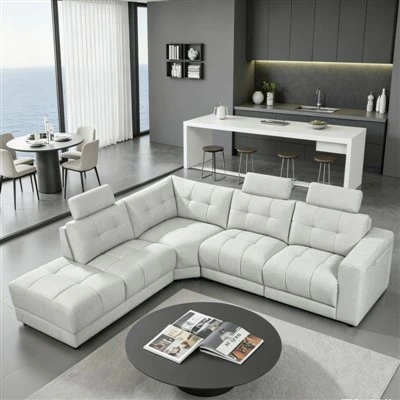
The electric leg rest - sometimes called a powered footrest, motorized ottoman, or telescopic leg rest - is one of the defining features of modern powered reclining sofas. Unlike a manual leg rest, which the user extends by pulling a lever or pushing with their heels, an electric leg rest extends and retracts smoothly at the touch of a button, driven by a linear actuator and a linkage mechanism.
The Shift from Manual to Electric Reclining
The furniture industry has undergone a clear transition from manual to powered reclining mechanisms over the past decade. Several factors drive this shift:
• **User preference**: Electric recline is easier to operate, particularly for users with limited hand strength or mobility. The smooth, controlled motion feels more premium than a manual lever.
• **Feature integration**: Electric mechanisms can be paired with adjustable headrests, lumbar support, massage functions, USB charging ports, and memory positions - features that are difficult or impossible to implement with a manual mechanism.
• **Smart-home compatibility**: Powered mechanisms can be integrated with home automation systems, voice assistants, and smartphone apps, enabling features like scheduled recline, sleep-timer positions, and user-presets.
• **Commercial applications**: In cinemas, home theaters, and healthcare facilities, electric recline allows precise, repeatable positioning that manual mechanisms cannot match.
The leg rest is a critical part of this transition because it is the component that most directly affects the user's comfort in the reclined position. A well-designed electric leg rest extends smoothly, supports the legs from heel to thigh, and retracts without trapping fingers or pinching upholstery.
How an Electric Leg Rest Telescopic Assembly Works
[NOTE: The following technical description is based on the patent title and generally available engineering knowledge of electric leg rest mechanisms. It does not reproduce the patent's claims. For the exact structural scope, refer to the full CNIPA publication.]
An electric leg rest assembly consists of several interconnected subsystems:
The Linkage Mechanism
The core of the leg rest is a multi-bar linkage that converts the linear motion of the actuator into the curved, extending motion of the footrest panel. Typical designs use a four-bar or six-bar linkage, with the footrest panel attached to the output link. As the actuator extends, the linkage pivots, lifting the footrest from its stored position (flush with the sofa front) to its extended position (horizontal, supporting the user's lower legs).
The linkage geometry determines several key performance characteristics:
• **Extension length**: How far the footrest extends from the sofa frame. A longer extension provides more leg support but requires more under-seat space.
• **Lift height**: How high the footrest rises. A higher lift better supports the thighs but may interfere with side tables or nearby furniture.
• **Motion profile**: The path the footrest follows as it extends. A well-designed profile keeps the footrest close to the frame during initial extension (to avoid catching on rugs) and then lifts smoothly.
• **Mechanical advantage**: The ratio of actuator force to footrest lifting force. A higher mechanical advantage allows a smaller, cheaper actuator but may reduce extension speed.
The Linear Actuator
The actuator is the motor that drives the linkage. Most sofa leg rest actuators are 12V or 24V DC linear actuators, consisting of a DC motor, a gearbox (typically worm or planetary), a lead screw or ball screw, and a telescoping tube. The actuator is rated by its push force (typically 1,000 to 3,000 Newtons), stroke length (typically 100 to 200 mm), and speed (typically 10 to 30 mm/s).
Key actuator specifications for B2B evaluation include:
• **Duty cycle**: How long the actuator can run continuously before needing to cool down. A low-duty-cycle actuator (e.g., 10% duty) may overheat if used repeatedly in a commercial setting.
• **Ingress protection (IP) rating**: For environments where spills are likely (cinemas, hospitality), an IP54 or higher rated actuator is preferred.
• **Noise level**: A quiet actuator (below 50 dB at one meter) is essential for home theater and residential applications.
• **End-of-stroke protection**: The actuator should have built-in limit switches or current-sensing overload protection to stop at full extension and full retraction without stalling.
• **Manual release**: In case of power failure, a manual release cord or lever allows the user to retract the leg rest. This is a safety requirement in many applications.
The Control System
The control system manages the actuator's operation. At minimum, it includes a power supply (a wall adapter or battery pack), a control button or switch, and wiring. More advanced systems include:
• **Handheld remotes** with multiple buttons for headrest, lumbar, and leg rest control
• **Memory positions** that store and recall user-preferred angles
• **Anti-pinch protection** that reverses the actuator if an obstacle is detected
• **USB charging ports** integrated into the control panel
• **Bluetooth or Wi-Fi connectivity** for app control
The Footrest Panel
The footrest panel is the upholstered surface that supports the user's legs. It is typically a plywood or particleboard panel, 8 to 15 mm thick, padded with polyurethane foam and upholstered to match the sofa. The panel attaches to the linkage via brackets, and the attachment must be strong enough to support the full weight of the user's legs plus dynamic loads.
Safety Considerations for Electric Leg Rests
Electric leg rests introduce safety considerations that manual mechanisms do not. The most important are:
Pinch and Crush Hazards
As the leg rest extends and retracts, the linkage creates moving gaps that can pinch fingers, hair, or fabric. A well-designed mechanism minimizes exposed pinch points, uses shrouding or covers to hide the linkage, and may include anti-pinch sensors that reverse the motor if resistance is detected. Buyers should evaluate the mechanism in motion, checking for gaps larger than 8 mm (a common threshold for finger-pinch risk) in any accessible area.
Power Failure and Entrapment
If power fails while the leg rest is extended, the user may be trapped in the reclined position. All electric leg rest systems should include a manual release - typically a pull cord under the seat - that allows the leg rest to retract under the user's weight. In healthcare and senior-living applications, a battery backup that allows at least one full retraction cycle is strongly recommended.
Electrical Safety
The actuator, power supply, and wiring must meet applicable electrical safety standards. In the EU, the Low Voltage Directive (LVD) and EMC Directive apply; in North America, UL 962 (Household Electric Furnishings) or equivalent standards may apply. Buyers should ask for test reports and certification marks. [NOTE: Specific electrical certifications held by JSC or its products should be verified against current certificate documentation. This article describes general industry requirements, not a guarantee that any specific product holds a given certification.]
Overload Protection
The actuator should stop or reverse if it encounters an obstacle - a child's hand, a pet, a remote control - during extension. Current-sensing overload protection is the most common method: the controller monitors motor current and stops if it exceeds a threshold. The threshold must be calibrated carefully: too low and the leg rest stops under normal loads (e.g., a user resting their legs on it); too high and it does not stop when it should.
Durability and Testing
Electric leg rest assemblies must survive thousands of extend-and-retract cycles. The mechanism industry commonly uses fatigue testing under load to verify durability. In a typical test, the leg rest is cycled through its full range of motion while weighted to simulate a user's legs, for 10,000 to 25,000 cycles or more.
JSC sources mechanism components from suppliers whose products have undergone third-party fatigue verification. For example, SGS Report No. AJHL2112004546FT documents a 360-pound, 25,000-cycle fatigue test on a multi-function sofa extension mechanism - including the leg rest function - with a passing result. [NOTE: The SGS test was commissioned by the component supplier, REMACRO Machinery & Technology (Wujiang) Co., Ltd., and covers the supplier's mechanism models. It is presented as supplier-level component verification, not as a test of JSC's electric leg rest telescopic assembly specifically.]
For electric mechanisms, additional testing may include:
• **Actuator life test**: Cycling the actuator alone to its rated cycle count (typically 10,000 to 20,000 cycles)
• **Environmental test**: Operating the mechanism after exposure to temperature and humidity extremes
• **Vibration test**: Simulating transport vibration to verify that wiring connections and fasteners remain secure
• **Acoustic test**: Measuring noise levels before and after cycling to detect bearing or gear wear
Market Outlook and Trends
The powered recliner market is projected to continue growing, driven by several trends:
• **Aging population**: As populations age in North America, Europe, and East Asia, demand for easy-to-operate, supportive seating increases. Electric leg rests are particularly valued by users with mobility challenges.
• **Home entertainment**: The growth of streaming media and home theaters drives demand for cinema-style seating with powered recline, adjustable headrests, and integrated features.
• **Smart furniture**: The integration of furniture with smart-home systems creates new opportunities for electric mechanisms, including app control, voice control, and automated positioning.
• **Health and wellness**: Features like zero-gravity positioning, massage, and heat therapy - all of which require powered mechanisms - are moving from niche to mainstream.
• **Sustainability**: Durable, repairable electric mechanisms reduce the total cost of ownership and the environmental impact of furniture. Buyers increasingly ask about actuator recyclability, replacement parts availability, and energy efficiency.
Procurement Guide for Electric Leg Rest Mechanisms
When sourcing sofas with electric leg rests, B2B buyers should evaluate the following:
1. **Actuator specifications**: Push force, stroke, speed, duty cycle, noise level, and IP rating.
2. **Linkage design**: Extension length, lift height, motion profile, and pinch-point protection.
3. **Control options**: Button, remote, app, voice, memory positions, USB charging.
4. **Safety features**: Anti-pinch, manual release, overload protection, battery backup.
5. **Certifications**: Electrical safety (LVD, UL), EMC, and any market-specific requirements.
6. **Durability data**: Fatigue test reports for the mechanism and actuator.
7. **Spare parts**: Availability of replacement actuators, controllers, and power supplies, and the procedure for field replacement.
8. **Warranty**: Coverage period for the mechanism and electrical components, and what is excluded.
9. **Intellectual property**: JSC's utility model (ZL 2024 2 2301044.X) covers a specific electric leg rest telescopic assembly design. Specifying a patented mechanism reduces IP risk and provides a differentiating feature. [NOTE: Patent scope and enforceability are jurisdiction-specific; consult a patent professional before making non-infringement representations.]
Battery and Power Options
Electric leg rest mechanisms require a power source, and the choice of power supply affects the installation, usability, and reliability of the system. Three main power options are available:
Wall Adapter (AC Power)
The most common power source is a plug-in wall adapter that converts household AC (100-240V) to low-voltage DC (12V or 24V). Wall adapters are inexpensive, reliable, and provide unlimited runtime. However, they require a nearby electrical outlet and a visible power cord, which can be unsightly and may limit furniture placement. In commercial installations, the cord must be managed to avoid tripping hazards and comply with electrical codes.
Rechargeable Battery Pack
A rechargeable battery pack - typically lithium-ion or lithium-polymer, mounted under the seat - provides cordless operation. The battery is charged via a wall adapter and can power the mechanism for several hundred cycles between charges. Battery packs are ideal for rooms without convenient outlets and for furniture that may be repositioned frequently. However, they add cost, require periodic charging, and have a finite service life (typically 3 to 5 years, after which the battery must be replaced).
Hardwired Power
For built-in or contract installations, the mechanism may be hardwired to a dedicated electrical circuit. This provides the reliability of AC power without the visible adapter and cord, but it requires an electrician for installation and is not suitable for freestanding furniture.
For B2B buyers, the power option should be selected based on the application. Residential sofas typically use wall adapters or battery packs; hotel and contract installations may use hardwired power for permanent installations. JSC offers multiple power options and can advise on the best choice for each application, including compliance with local electrical codes.
Integration with Other Powered Functions
A modern powered sofa rarely has only an electric leg rest. More commonly, the leg rest is part of an integrated system that may include:
• **Powered recline**: The backrest reclines electrically, coordinated with the leg rest extension.
• **Adjustable headrest**: A powered headrest that tilts or lifts independently.
• **Powered lumbar support**: An inflatable or mechanical lumbar support that adjusts at the touch of a button.
• **Massage**: Vibration or shiatsu massage motors integrated into the seat and back.
• **USB and wireless charging**: Integrated charging ports for personal devices.
• **Memory positions**: Programmable presets that recall the user's preferred recline, headrest, and lumbar angles.
• **Smart-home integration**: Bluetooth or Wi-Fi connectivity for app or voice control.
The integration of these functions requires a sophisticated control system that coordinates multiple actuators and sensors. The control unit - typically a small PCB mounted under the seat - manages power distribution, actuator sequencing, safety interlocks, and user input. A well-designed control system ensures that functions operate smoothly and independently, without interference or conflict.
For B2B buyers, the key question is whether the supplier offers an integrated control platform or relies on discrete, independently sourced components. An integrated platform is more reliable, easier to service, and provides a better user experience. JSC's electric leg rest mechanism (Patent No. ZL 2024 2 2301044.X) is designed to integrate with powered recline, headrest, and lumbar systems, providing a coordinated motion profile that can be customized for each sofa model.
Conclusion
The electric leg rest telescopic assembly is a key enabler of the modern powered reclining sofa. By combining a precision linkage, a reliable linear actuator, and an intelligent control system, it delivers smooth, safe, and repeatable leg support at the touch of a button. JSC's grant of CNIPA Utility Model Patent ZL 2024 2 2301044.X - a self-developed design with a maintained legal status - adds a legally protected, formally examined mechanism to the company's powered-recline portfolio. For B2B buyers, the combination of patented hardware, third-party-tested components, and transparent safety documentation provides a strong foundation for specifying electric reclining sofas with confidence.
Developing a powered reclining sofa program? Contact the JSC engineering team for mechanism specifications, actuator options, safety documentation, and a customized quotation. Get a Quote today.
By JSC Engineering Team. JSC (Huizhou Lanmasen Technology Co., Ltd.) designs and manufactures functional sofa mechanisms and complete seating solutions for B2B clients worldwide. This article is for general technical reference and does not constitute a warranty or regulatory compliance guarantee.