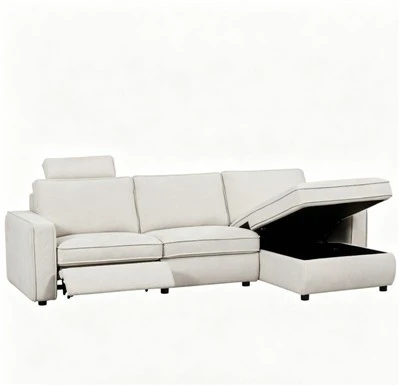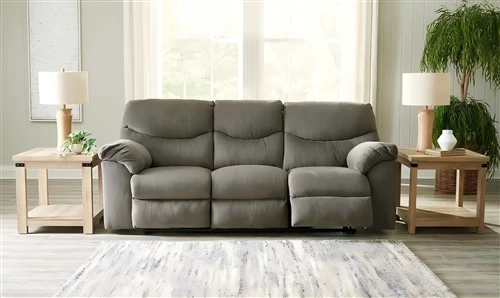

Sofa Bed All-in-One: Style Meets Function
For US furniture wholesalers, importers, and retail brand purchasing managers, a sofa bed is more than a sofa with an additional function. It is a product whose value depends on how reliably its frame converts, how well its sleeping surface fits, how consistently it can be manufactured, and whether its documentation supports sale in the intended market.
These factors are closely connected. A mechanism that binds during conversion can damage upholstery. A mattress that does not fold as designed can interfere with the frame. A change in foam, fabric, or mattress construction may also affect the compliance documentation associated with the product. The consequences are commercial as well as technical: additional inspections, replacement parts, customer complaints, and delays in releasing inventory.
For buyers, the challenge is to establish evidence before a bulk order is approved. Product photographs and a successful showroom demonstration are useful starting points, but they do not establish repeatability across a production run. A more dependable purchasing decision combines a defined test procedure, documented quality checks, configuration control, and a review of applicable US requirements.

Why Mechanism Durability Defines Your Wholesale Sofa Bed Profit Margin
A conversion mechanism may operate smoothly during a brief demonstration and still develop problems after repeated use. The reason is that a conversion involves several components moving in coordination: pivot points, hinges, locking parts, sliding tracks, frame connections, and the upholstery clearances around them. A weakness in one area can affect the whole assembly.
Consider a pull-out design. If its tracks are not aligned, the frame may require more force to extend. If the frame connections are uneven, one side may move ahead of the other. If the mattress or fabric catches on a joint, the user may pull harder, placing additional stress on the mechanism. What appears to be a hardware problem can therefore originate in frame geometry, upholstery construction, or final assembly.
For an importer, identifying the cause matters because different failures require different corrective actions. Replacing a damaged component will not solve a recurring alignment problem if the mounting points are incorrect. Likewise, adjusting a mechanism will not resolve interference caused by an overly thick mattress or poorly positioned lining.
What Causes Mechanisms to Fail?
Several failure patterns deserve attention during supplier evaluation.
Loose pivot connections: Repeated movement can reveal inadequately secured fasteners, weak mounting points, or inconsistent assembly. Excessive play may produce noise and uneven movement. The inspection should identify whether the movement comes from a fastener, a worn component, or the supporting frame.
Misaligned folding frames: If the left and right sides do not move together, the sleeping surface may sit unevenly or the frame may resist closing. This can point to dimensional variation, incorrect mounting positions, or an assembly problem. Checking the frame before upholstery is installed makes the cause easier to identify.
Inconsistent locking: A locking component must engage and release according to the mechanism's intended operating procedure. A lock that engages only when the user pushes or lifts a section unusually hard can create a usability and safety concern. Inspectors should verify engagement at the intended positions rather than simply confirming that the product opens.
Track obstruction and friction: Pull-out systems depend on clear travel paths. Misaligned rails, damaged hardware, loose fasteners, or interference from upholstery can increase operating effort. Inspecting the mechanism in both directions is important because a unit may extend correctly but bind during retraction.
Fabric and mattress interference: Covers, lining, foam, and mattress sections can become trapped at joints or moving edges. Repeated contact may damage seams or prevent complete closure. This is why a mechanism should be tested with the actual approved upholstery and mattress configuration, not only as an exposed metal assembly.
These risks should not be treated as proof that a particular model will fail. They are failure modes to investigate and record. A credible supplier assessment distinguishes between a potential risk, an observed defect, a confirmed root cause, and a verified corrective action.
How to Evaluate a Sofa Bed Mechanism Durability Test
A useful sofa bed mechanism durability test evaluates the complete conversion process under documented conditions. Buyers should request the tested model identification, mechanism version, load conditions, operating procedure, cycle count, inspection intervals, and a record of failures or adjustments.
The cycle definition must be unambiguous. For a conventional convertible design, one cycle could be defined as a complete conversion from sofa to bed and back to sofa. However, the procedure should follow the mechanism manufacturer's intended instructions. Some designs require a specific lifting sequence or release action; forcing the product through an improvised sequence can produce misleading results.
The test should also use a clearly identified product configuration. A report from a similar-looking model may not apply if the current version has a different frame, hinge, mattress thickness, or mounting arrangement. Buyers should confirm that the tested configuration corresponds to the approved sample and the production specification.
For initial supplier screening, the buyer and factory may agree on staged inspections after 100, 500, and 1,000 operating cycles. These are proposed checkpoints for an internal evaluation plan, not universal industry requirements, mandatory pass criteria, or verified JSC Furniture test results. The appropriate test duration, load, and acceptance criteria depend on the product design, intended use, applicable test methods, and purchasing agreement.
The benefit of staged inspection is that it makes changes visible. At each checkpoint, the inspector can record whether the mechanism still moves consistently, locks correctly, maintains frame alignment, and avoids fabric or mattress interference. Any increase in operating effort, unusual noise, loosened fasteners, or deformation should trigger investigation rather than being dismissed because the unit still opens.
A practical test record should include:
Product model and revision number.
Mechanism supplier and component identification, where available.
Test load and the basis for selecting it.
Definition of one complete cycle.
Number of completed cycles and inspection intervals.
Defects, adjustments, repairs, and final disposition.
Acceptance criteria agreed before testing begins.
The distinction between a test plan and a test result is essential. A plan says what will be checked. A completed report records what actually happened. A statement such as "passed 1,000 cycles" should only be published or used in purchasing decisions when a traceable test record supports it.
Buyers should also be careful when reviewing standards. ASTM F2598 is a standard for sealed storage chests, not a general sofa-bed folding-mechanism durability standard. It should not be cited as evidence that a sofa bed has passed a mechanism test. If a supplier refers to a recognized standard, ask for its full designation, title, scope, edition, and explanation of how it applies to the actual product. Where no directly applicable standard has been established, the buyer and manufacturer should document an agreed engineering test protocol rather than implying formal certification.
Choose the Mechanism for the Intended Retail Position
Different conversion designs create different inspection priorities.
A pull-out mechanism needs sufficient clearance for the frame to extend and retract, together with suitable storage space for its sleeping components. A folding-back or click-clack design relies on consistent hinge movement and correct engagement at its intended positions. Multi-section folding designs can offer compact storage or different configurations, but additional joints create more locations where alignment and clearance need to be checked.
No mechanism type is automatically the best choice for every wholesale assortment. The decision should reflect the product's intended price position, dimensions, expected use, ease of operation, and service requirements. A lower purchase price may be less attractive if the mechanism is difficult to repair or replacement components are unavailable.
Before approving a bulk order, compare the physical sample with the production drawings, mechanism specification, mattress details, and spare-parts arrangement. Record any approved deviation.
For product selection, review the sofa bed collection and confirm the exact mechanism configuration with the supplier before placing an order.
Factory QC Checks Every Importer Should Verify Before Shipment
Mechanism durability is only one part of product reliability. Frame fabrication, hardware installation, upholstery, mattress fit, final assembly, and packaging can each introduce variation. The purpose of factory quality control is to identify defects early enough to correct them before they become problems in a shipment.
For importers, a sample approval is not a substitute for production control. A sample demonstrates one unit at one point in time. A bulk order requires evidence that the same approved construction and acceptance criteria are being followed throughout production.
Inspect the Frame Before Upholstery
The internal frame should be checked while its joints and mechanism mounting points remain accessible. Verify dimensions against the approved drawings, inspect joint quality, and confirm that mounting locations align with the mechanism specification. The inspection should also look for visible damage, unstable connections, and deviations that could affect conversion.
The reason for checking the frame early is straightforward: upholstery can conceal the source of a problem. If a mounting point is misplaced, the mechanism may sit under uneven stress. Once the cover is installed, identifying the cause may require removing fabric or dismantling part of the assembly.
A useful inspection record links each finding to a drawing or measurement reference. Rather than recording only "frame acceptable," specify the dimensions checked, the relevant tolerances, the sample identification, and the disposition of any deviation. Tolerances should come from the approved engineering specification; they should not be invented after an inspection failure.
Buyers should also establish a change-control process. A substitution in frame material, joint construction, or mechanism mounting design may affect performance even when the finished appearance remains unchanged. The manufacturer should obtain approval before introducing changes that could affect fit, durability, compliance, or repairability.
Test Hardware Before and After Installation
Before installation, inspect mechanism components for visible damage, inconsistent movement, missing parts, and sharp edges. Confirm that the correct component version is being used and that assembly follows the supplier's instructions.
After installation, test the complete conversion sequence. Check both sides of the frame, locking engagement, opening and closing effort, and any unusual sounds. The inspection should include the full movement in both directions rather than stopping when the bed reaches its open position.
Record defects by type and location. If the same problem appears across multiple inspected units, investigate whether it indicates a common assembly or component issue. The factory should document the suspected cause, corrective action, and follow-up inspection. Rechecking only the repaired unit may be insufficient if the same process could have affected other units in the production lot.
For a repeat order, retain the previous approved test record as a comparison point. A change in operating effort, alignment, or locking behavior can be important even if the product still meets the minimum acceptance criteria. The comparison does not replace a formal test, but it can help identify process drift before a pattern develops.
Check Upholstery, Mattress Fit, and Finished Dimensions
The upholstery inspection should cover seam quality, fabric tension, alignment, and areas exposed to repeated movement. Inspect the sofa in both configurations. Fabric that looks smooth when the product is closed may become stretched, trapped, or pinched when the frame unfolds.
Mattress fit deserves separate attention. Confirm that the mattress folds and stores as intended, does not obstruct the mechanism, and matches the approved specification. If the mattress is supplied separately, verify its dimensions and identification. If it is permanently attached, confirm that the finished assembly matches the configuration used for the compliance assessment.
Finished dimensions should also be measured in both sofa and bed modes. Record overall width, depth, height where relevant, and maximum extension of the moving frame. Compare the results with the approved drawings and the dimensions intended for retailer product listings. This can prevent a mismatch between published specifications and the actual space required by the product.
The point is not to collect measurements for their own sake. Each measurement should connect to a defined acceptance criterion or a real fit requirement. For example, the maximum bed extension affects floor-space planning, while the folded dimensions affect warehouse storage, packaging, and retail display. Clear records allow the buyer to distinguish a cosmetic deviation from one that affects product function.
Verify Packaging and Shipment Consistency
A product that passes inspection at the factory can still arrive damaged. Hinges, exposed frame corners, projecting brackets, and other vulnerable areas need protection against movement and impact during handling and transport. Packaging should be evaluated as part of the finished product, not treated as an unrelated logistics task.
Before shipment, verify carton markings, model identification, hardware packs, assembly instructions, and packaging dimensions. Confirm that any changes to the carton or product configuration have been reflected in the shipping plan. If packaging has been revised, a documented trial can help identify whether the product moves inside the carton or whether vulnerable components need additional protection.
Pre-shipment inspection should follow an agreed sampling plan and acceptance criteria. The report should identify the inspected lot, sample size, defects found, and final disposition. Sampling can help identify patterns, but it does not prove that every unit is defect-free. The buyer should agree in advance how major, minor, and critical defects will be handled and who has authority to release the shipment.
Control Changes Across Repeat Orders
Repeat-order consistency is particularly important when a model becomes a regular SKU. A change in mechanism supplier, frame material, mattress thickness, foam specification, or upholstery construction can affect performance even if the silhouette remains the same.
Use a written product specification and an approved reference sample. If the supplier proposes a substitution, request an assessment of its effect on durability, finished dimensions, packaging, compliance documentation, and replacement-part availability. Where the change affects the tested configuration, determine whether further testing or documentation updates are necessary before production proceeds.
This is also where buyers can make quality costs more visible. Suppose an importer orders 200 units and uses a hypothetical 3% defect rate for internal risk planning. That would represent six potentially affected units. If the assumed landed cost is $300 per unit, the inventory value associated with those six units would be $1,800.
This is an illustrative calculation, not a furniture-industry average, a measured failure rate, or JSC Furniture performance data. It also excludes inspection, reverse logistics, replacement shipping, labor, retailer deductions, and customer-service costs. Its purpose is to show how even a small assumed defect rate can create a material exposure on a bulk order-not to predict the actual cost of a specific shipment.
The more useful approach is to build a supplier scorecard from the buyer's own records: defect categories, inspection outcomes, corrective-action closure, warranty claims, and repeat-order deviations. After enough comparable shipments have been recorded, the importer can calculate its own defect and return rates rather than relying on unsupported industry estimates.
US Compliance Checklist for Importing Sofa Beds
A product can pass factory inspection and still create a distribution problem if its regulatory classification or documentation is incorrect. For a US-bound sofa bed, compliance review should begin during product development, when the construction and materials are being finalized-not after the goods have been packed.
Two areas deserve particular attention: the federal upholstered-furniture flammability requirements and the federal mattress rules that may apply to the sleeping component. These requirements address different product categories, so buyers should not assume that one report or label automatically covers the complete sofa-bed assembly.
Understand the Upholstered-Furniture Flammability Requirements
The US Consumer Product Safety Commission (CPSC) explains that federal upholstered-furniture flammability requirements are set out in 16 CFR Part 1640, which incorporates California Technical Bulletin 117-2013 (TB 117-2013). The regulation applies to upholstered furniture within its scope; it should not be described as a California-only requirement.
Official reference: CPSC Upholstered Furniture Guidance.
TB 117-2013 includes test methods for cover fabric, resilient filling material, barrier material, and decking material. The applicable test path depends on the product's construction. A manufacturer may use a compliant barrier construction or a combination of passing cover fabric and filling materials, while decking material, where present, must meet the applicable requirement.
This distinction matters when a product specification changes. A report associated with one fabric, foam, barrier, or construction may not automatically establish compliance for a materially different configuration. Buyers should request documentation that identifies the evaluated materials and explains how the evidence relates to the actual product being purchased.
The federal labeling requirement is also specific. CPSC guidance states that upholstered furniture subject to Part 1640 must carry a permanent label bearing this statement:
Complies with U.S. CPSC requirements for upholstered furniture flammability.
CPSC explains that the label must remain attached through merchandising and distribution; a hangtag or zip tie does not qualify as a permanent label. The federal testing requirement took effect on June 25, 2021, and the labeling requirement took effect on June 25, 2022, according to CPSC guidance.
For importers, a practical document check should confirm the product's scope, supporting material records, the required label, and consistency between the approved sample and production model. A supplier's general statement that a fabric or foam is "fire resistant" is not enough to establish that the finished product meets the applicable requirements.
Determine Whether Mattress Rules Apply
Sofa beds require an additional scope assessment because the upholstered seating and mattress components may be treated differently under federal rules.
The CPSC's mattress FAQ explains that mattresses within scope are subject to 16 CFR Parts 1632 and 1633, addressing cigarette ignition resistance and open-flame resistance, respectively. It also specifically discusses futons and sofa beds:
If the mattress portion is detachable, the detached mattress is likely subject to Parts 1632 and 1633, while the remaining upholstered product is likely subject to Part 1640.
If the mattress is permanently attached to the rest of the product, the product as a whole is likely subject to Part 1640.
These are CPSC's general descriptions of likely treatment, not a substitute for classifying every design. Buyers should confirm the applicable requirements for the actual construction and intended product configuration.
Official reference: CPSC Mattresses, Mattress Pads, and Mattress Sets FAQ.
Where a general-use mattress is subject to applicable CPSC rules, the manufacturer or importer must provide a General Certificate of Conformity (GCC) based on testing or a reasonable testing program, as applicable. A mattress report should correspond to the actual mattress construction and model rather than a similar-looking product from the same supplier.
The important purchasing question is not simply whether the supplier has a test report. It is whether the report covers the component and configuration being imported, whether the relevant rule applies, and whether the documentation is adequate for the product's intended US market.
Build Compliance Checks into the Purchasing Workflow
Before authorizing production, importers should confirm:
Product classification: Identify the exact sofa-bed design, including whether its mattress is detachable or permanently attached.
Applicable rules: Confirm which upholstered-furniture and mattress requirements apply to the configuration.
Test evidence: Request the relevant reports and verify the tested model, materials, and scope.
Labels and certificates: Confirm the required permanent upholstered-furniture label and any applicable mattress certification documents.
Configuration control: Review material or component substitutions that could affect the scope or validity of existing documentation.
Record retention: Keep the approved specification, relevant reports, label artwork, and shipment records linked to the same product model.
These checks should be completed early enough for discrepancies to be corrected before goods are released for shipment. If the actual production model differs from the one represented in the documentation, the importer may need additional review or testing before the product can be confidently released for the intended market.
Compliance is not a marketing adjective. It is a claim that should be supported by the applicable rule, the correct evidence, and a product configuration that matches the records. Buyers comparing a wholesale sofa bed with other multifunctional models should ensure that the quotation, approved sample, testing documentation, label, and final shipping records describe the same product.
For JSC Furniture's wholesale partners, the strongest sourcing process connects mechanism testing, factory inspection, and compliance review to one approved specification. The objective is not to claim that every possible defect can be eliminated. It is to make risks visible, define acceptance criteria before production, document what was actually tested, and establish a clear process for resolving deviations.
A commercially successful sofa bed must do more than look versatile in a product photograph. It needs to convert as intended, retain its fit and finish, arrive in saleable condition, and carry documentation appropriate to the market where it will be sold. For importers, those are verifiable purchasing criteria-not assumptions based on appearance or unit price alone.
Sources
U.S. Consumer Product Safety Commission (CPSC). Upholstered Furniture Flammability Requirements.
https://www.cpsc.gov/Business--Manufacturing/Business-Education/FAQ?p=3019&tid%5B3038%5D=3038
Source for federal upholstered-furniture flammability requirements, incorporation of TB 117-2013, component test methods, effective dates, and permanent labeling.
U.S. Consumer Product Safety Commission (CPSC). Mattresses, Mattress Pads, & Mattress Sets - Frequently Asked Questions.
https://www.cpsc.gov/FAQ/Mattresses-Mattress-Pads-Mattress-Sets
Source for the applicability of 16 CFR Parts 1632 and 1633 to mattresses, guidance on detachable versus permanently attached sofa-bed mattresses, and GCC requirements for applicable general-use mattresses.
U.S. Consumer Product Safety Commission (CPSC). Flammable Fabrics Act (FFA) - Business Guidance.
https://www.cpsc.gov/Business--Manufacturing/Business-Education/Business-Guidance/Flammable-Fabrics-Act
Source for general background on federal flammability requirements and product certification obligations.
ASTM International. ASTM F2598-22: Standard Consumer Safety Specification for Sealed Storage Chests such as Cedar Chests, Hope Chests, Blanket Chests, Keepsake Chests.
https://store.astm.org/f2598-22.html
Source used to verify that ASTM F2598 addresses sealed storage chests, not sofa-bed folding-mechanism durability.