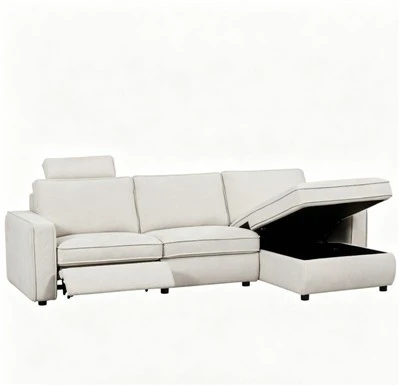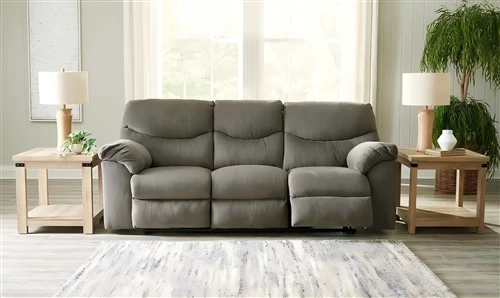

3 Seater Recliner Sofa: A Wholesale Buyer's Guide
A three-seat reclining sofa can be a valuable addition to a furniture retailer's core upholstery lineup. For US furniture wholesalers and importers, the appeal of a 3 seater recliner sofa lies in its ability to combine familiar living-room seating with a feature customers can experience immediately in a showroom. It gives retailers a practical product to merchandise alongside stationary sofas, loveseats, and reclining chairs without building an entirely separate category.
However, wholesale buyers need to look beyond the appearance of a finished sample. A reclining sofa contains moving parts, load-bearing structures, upholstery, and multiple points where assembly quality affects long-term performance. A model that looks impressive on the showroom floor but develops loose mechanisms, uneven footrests, or inconsistent seat support can create costly returns and after-sales work.
For importers building a repeatable product range, the objective is to find a design that combines retail appeal, dependable construction, manageable shipping and packaging, and consistent production across bulk orders.

Why a 3 Seater Recliner Sofa Deserves a Place in a Wholesale Assortment
In the US furniture market, reclining upholstery serves a recognizable retail category. Buyers can position these products as feature-led alternatives to conventional stationary seating, particularly in stores that carry casual living-room furniture, family-oriented collections, and coordinated upholstery sets.
For wholesalers, the opportunity is not simply to stock another large sofa. It is to select a product that fills a clear role within the assortment.
A three-seat model is especially useful because it offers a familiar seating format while allowing retailers to demonstrate a functional difference. Customers can compare the upright silhouette with the extended footrest, feel the seat cushioning, and assess the upholstery in person. That creates a more tangible sales conversation than a product whose main selling point is a color or decorative detail.
Several commercial considerations make this category worth evaluating:
A clear merchandising story: Sales staff can demonstrate reclining functionality rather than relying entirely on fabric swatches or product photographs.
A complementary product category: Retailers can display reclining models alongside stationary three-seaters, sectionals, and accent chairs to cover different price points and seating preferences.
Options for different store formats: A fabric-covered model may suit a casual or contemporary assortment, while a leather-look or leather-upholstered alternative may fit a different price and design position.
Potential for coordinated purchasing: Buyers can explore matching loveseats or reclining chairs where the supplier's collection and production capabilities support them.
These are assortment advantages, not a guarantee of sales. Actual performance depends on local customer preferences, retail pricing, delivery arrangements, and the quality of the product. Wholesalers should validate demand through retailer feedback and sales data before committing to a large initial order.
Before placing a bulk order, buyers should also confirm the precise configuration. A three-seat frame does not automatically mean that all three positions recline. Some models have two reclining end seats with a stationary center seat; others use different mechanisms or seating arrangements. Product listings, samples, quotations, packaging labels, and purchase orders should all describe the same configuration.
That detail matters when a retailer plans a showroom demonstration or advertises the sofa to customers. A mismatch between the display sample and delivered stock can quickly become a customer-service problem.
For buyers reviewing the available range, JSC Furniture's 3 seater recliner sofa product page is a relevant starting point for evaluating a dedicated three-seat reclining model.
Factory Production and Quality Control: Where Bulk Buyers Should Look Closely
A reclining sofa needs more than a well-finished outer frame. Its mechanical components, structural connections, upholstery tension, and assembly tolerances all affect the finished product. For a wholesale buyer, the challenge is making sure the sample approved before production matches the goods delivered in the container.
At JSC Furniture, factory manufacturing experience is relevant not only to the appearance of the sofa but also to how the product moves through production and inspection. Buyers should look for a process that makes defects easier to identify before packing, rather than relying on a final visual check alone.
Frame preparation and structural assembly
The inspection process should begin before upholstery covers the frame. The factory needs to check frame dimensions, joint stability, and the mounting areas used by the reclining mechanism. Poor alignment at this stage may lead to uneven movement, unwanted noise, or differences between the left and right seats.
For importers, the practical question is whether the supplier checks these areas during production and can address problems before the sofa reaches final assembly. A finished sample alone cannot demonstrate that every unit in a bulk order will meet the same standard.
Reclining mechanism installation
The mechanism deserves its own inspection point. Whether the model uses a manual release or a powered system, the assembly must be installed correctly and operate without interference from the frame or upholstery.
For a manual recliner sofa, buyers should pay attention to handle operation, release response, footrest movement, and whether the mechanism returns smoothly to its closed position. The mechanism should not scrape against the frame or require noticeably different effort between equivalent seats.
A practical inspection routine includes opening and closing each reclining position repeatedly, checking the locking and release functions, and listening for unusual sounds. Inspectors should also look for loose fasteners, exposed sharp edges, and upholstery caught in moving joints.
Upholstery and finishing
Fabric introduces another set of quality risks. Uneven tension around the footrest, poorly aligned seams, puckering near the armrests, or inconsistent padding can make two sofas from the same order look noticeably different.
A fabric reclining sofa should be evaluated for seam consistency, pattern alignment where applicable, fabric shade variation, and how the upholstery behaves when the footrest is extended and retracted. The fabric must accommodate the movement of the mechanism without bunching excessively or pulling at stress points.
Wholesale buyers should approve the fabric specification and color reference before production. Where shade consistency is commercially important, retain an approved swatch and compare it against production materials under consistent lighting. This is particularly useful when repeat orders arrive months apart.
Final inspection and packing
A sound quality-control process should include a final functional check, a visual inspection, and a packaging review. Inspectors should verify that the correct configuration has been assembled, that the reclining functions work, and that the finish matches the approved sample.
Packaging deserves equal attention. Reclining sofas contain projecting components and moving parts that can be damaged during handling. Buyers should confirm that vulnerable areas are adequately protected, hardware is secured, and product labels and carton markings match the order. A packaging assessment or trial shipment can reveal problems that a showroom sample cannot.
For larger orders, ask the supplier to document its inspection checkpoints and agree on acceptance criteria before production begins. A pre-shipment inspection can help identify recurring defects while corrective action is still possible. Buyers should also establish a clear procedure for reporting defects and handling replacement parts.
The important distinction is between a supplier that says it checks quality and one that can explain what is checked, when it is checked, and how nonconforming products are handled.
Showroom Layout and Merchandising That Help Retailers Sell
Wholesale buyers also need to consider how a reclining model will perform on a retail floor. The best display is not necessarily the one with the most sofas. It is the one that allows shoppers and sales staff to understand the product without obstructing the rest of the showroom.
Give the reclining function enough space. A sofa displayed tightly against a wall or another furniture group may look neat when closed but become difficult to demonstrate. Retailers should measure the product in both its upright and fully reclined positions, following the supplier's clearance recommendations. Keep walkways clear and avoid placing tables where they interfere with footrest movement.
Build a comparison area instead of an isolated display. Position the reclining model near a conventional sofa or another upholstery option. This helps sales staff explain differences in function, silhouette, and seating experience. A complementary accent chair or loveseat can complete the display without making the area feel crowded.
Show the product in more than one position. If floor space allows, use one sample with the footrests closed and another with the reclining function extended. When only one sample is available, train sales staff to demonstrate the movement and return it to its standard display position afterward. The aim is to make the feature visible while keeping the showroom organized.
Use fabric samples and clear product information. Fabric swatches help buyers compare color and texture under the store's lighting. A concise display card can identify the upholstery, reclining configuration, available colors, and product dimensions. Be precise about which seats recline and whether the mechanism is manual or powered.
Plan replenishment around the actual configuration. A display model may have a different upholstery color or mechanism from the inventory held in the warehouse. Retail teams should be able to check the matching SKU, available stock, and lead time before promising delivery. For wholesalers, consistent model naming and clear product photography make this information easier to share with retail accounts.
Before a store commits to a full display program, wholesalers can test the arrangement with a limited number of models and track customer interactions, quoted sales, and requests for alternative upholstery. Feedback from several retailers can help determine whether the next order should emphasize fabric choices, mechanism types, or coordinated seating pieces.
The same information helps with assortment planning. A retailer whose customers prioritize easy operation may respond differently to a manual model than a store whose customers prefer powered features. The right purchasing decision should follow actual account feedback, not assumptions about what every US customer wants.
For JSC Furniture and its wholesale partners, successful supply involves more than manufacturing a visually appealing sofa. Clear specifications, repeatable quality checks, appropriate packaging, and practical merchandising information all contribute to a product that retail accounts can present and replenish with confidence.