
Gigixie brings 17 years of hands-on experience in sofa manufacturing and international furniture trade. Her expertise shapes every stage of order planning, regulatory compliance, and cross-border buyer-factory collaboration. She specializes in OEM and ODM upholstery projects, structural sofa design, packaging optimization, and bulk order risk mitigation for global furniture wholesalers, importers and hospitality procurement teams. She regularly shares practical sourcing guidance to help buyers avoid costly dimension, terminology and quality-control pitfalls.
Introduction
In international furniture trading, a product name can determine much more than how an item appears in a catalog. It can influence the quotation, product specification, factory production instructions, shipping documents, customs descriptions and, ultimately, whether a buyer receives the furniture originally ordered.
For international wholesalers and importers, understanding What does sofa mean is therefore not simply a vocabulary exercise. It is a practical sourcing requirement. The word sofa is widely used in the furniture industry, but its interpretation can differ between manufacturers, retailers, hospitality procurement teams and buyers operating in different English-speaking markets.
A buyer in the United States may use couch in a customer-facing product description, while a British supplier may describe a similar product as a settee. An Australian retailer may use lounge or lounge suite. Meanwhile, a factory quotation may identify all three products simply as a two-seater sofa.
These differences are manageable when everyone understands the product. They become expensive when a purchase order contains only a general name without dimensions, configuration, construction details or an approved reference drawing.
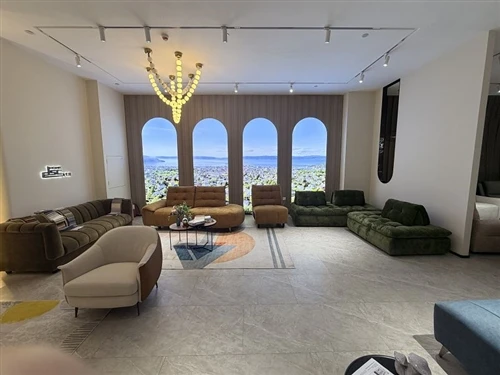
Consider a typical sourcing situation: an importer orders 120 units described as "three-seat sofas."(插入链接:https://www.jsc-sofa.com/living-room-sofa/fabric-living-room-sofa/simple-chenille-fabric-living-room-sofa.html) The factory interprets this as a fixed three-seat upholstered frame. The buyer, however, expects a modular three-section configuration with detachable components. Both parties may believe they have followed the agreed product description, yet the shipment does not meet the buyer's intended specification.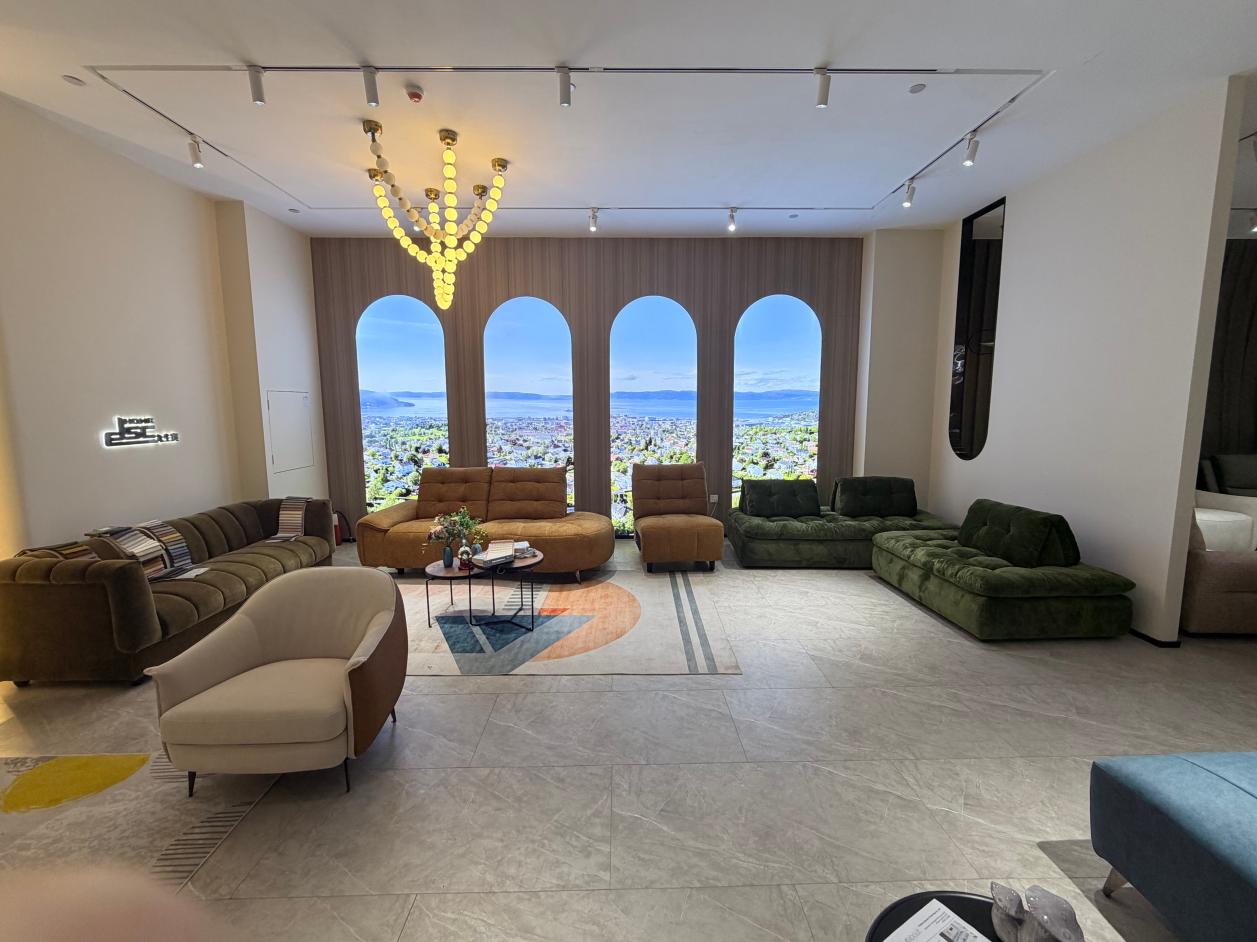 ALT:Display of Different Types of Sofas in the JSC Exhibition Hall
The resulting disagreement can involve rework, replacement costs, delayed container loading, additional freight and disputes over responsibility.
This article examines the historical meaning of sofa terminology, the differences between related seating categories across international markets, and practical methods for preventing terminology misunderstandings in wholesale purchasing.
The central principle is straightforward: a furniture name identifies a product category, but a controlled specification identifies the product that must actually be manufactured and delivered.
The Origin & Formal Definition Behind What Does Sofa Mean
1.1 The Historical Origin of the Word Sofa
The word sofa has a much longer history than its modern association with upholstered living-room furniture.
The English word came through French and ultimately derives from the Arabic ṣuffa. Its historical development is connected with Turkish usage as well. The word originally referred to a raised seating platform or bench, often covered with carpets and cushions.
Over time, its meaning developed toward the upholstered seating furniture familiar in modern commercial furniture catalogs.
The historical progression is useful because it explains why the modern word is broader than a specific frame design or seating configuration.
A sofa today may have:
- A fixed hardwood or engineered-wood frame.
- A fully upholstered back and seat.
- Two or more designated seating positions.
- Fixed or removable cushions.
- Fixed, modular or sectional construction.
- Manual or powered reclining mechanisms.
- A convertible sleeping function.
These features do not all define the word itself. They are product attributes that must be added to the commercial specification.
1.2 What Is the Formal Furniture Definition?
For sourcing purposes, a sofa can be described as:
A multi-person upholstered seating unit with a supporting back and generally two arms or raised ends, designed primarily for seated use.
This is a working commercial definition rather than a universal manufacturing standard.
The Oxford definition describes a long, comfortable seat with a back and arms for two or more people. Cambridge similarly describes a long, soft seat with a back and usually arms, and identifies couch as a synonym.
The Getty Research Institute's Art & Architecture Thesaurus provides a more specialized classification. It describes sofas as long upholstered seating objects with a back and two ends, primarily intended for sitting rather than reclining.
For professional buyers, these definitions suggest three important classification questions:
Seating capacity: Is the item designed for one person, two people or multiple occupants?
Physical configuration: Does it have a back, arms, open ends, separate modules or a continuous upholstered structure?
Primary function: Is it primarily for sitting, reclining, sleeping or a combination of these functions?
A product name alone cannot reliably answer all three.
1.3 Why Historical and Formal Definitions Matter to International Buyers
A dictionary definition is not a substitute for a technical specification, but it provides a common starting point when buyers and suppliers come from different markets.
Consider a wholesale order containing 300 upholstered seating units. The buyer uses the word sofa throughout the quotation, while the factory's internal product classification separates the order into:
- Two-seat fixed sofas.
- Three-seat fixed sofas.
- Modular corner configurations.
- Powered reclining sofas.
- Sofa beds.
If the quotation and production documents retain only the general word sofa, important distinctions can disappear during order transfer.
|
Department |
Information It Needs |
|
Purchasing |
Exact product model, configuration and agreed price |
|
Engineering |
Frame construction, dimensions and mechanism |
|
Production |
Component specifications and assembly instructions |
|
Quality Control |
Approved sample, inspection criteria and tolerances |
|
Warehouse |
Carton identification, quantity and SKU |
|
Logistics |
Packing dimensions, weight and loading information |
|
Customs Broker |
Accurate commercial description and applicable classification details |
|
Retail Buyer |
Correct model, appearance and functional features |
The same product may be described differently by these departments, but the underlying product identity must remain consistent.
This is why professional sourcing teams should maintain a controlled product naming system rather than rely on informal conversations or individual employees' preferred vocabulary.
1.4 Five Product Attributes That a Name Cannot Replace
When a buyer requests a sofa quotation, the following information should accompany the product name.
First: Seating Configuration
Specify whether the unit is a two-seater, three-seater, corner configuration, sectional or modular combination. Do not assume that the number of cushions automatically equals the number of seats.
Second: Overall Dimensions
Record width, depth and height in a consistent unit, usually millimeters for factory drawings. For sectional furniture, identify each module separately.
Third: Upholstery and Cushioning
Specify fabric or leather type, color reference, foam requirements, cushion construction and any approved material substitutions.
Fourth: Structural Construction
Clarify the frame material, suspension system, leg material, connection hardware and whether the frame is fixed or knock-down.
Fifth: Functional Features
Identify manual recliners, electric mechanisms, USB ports, sleeper mechanisms, storage compartments and removable components.
For example, a three-seat electric recliner (插入链接:https://www.jsc-sofa.com/functional-sofa/electric-recliner-sofa/triple-seat-power-recliner-sofa.html)should not simply appear as "three-seat sofa" on a purchase order. The mechanism type, power requirements, operating controls and reclining positions are commercially significant attributes.
Sofa vs Couch vs Loveseat: Regional Language Differences Across Global Furniture Markets
2.1 Sofa and Couch: Similar Products, Different Commercial Language
One of the most common questions in international upholstered furniture sourcing is whether a sofa and a couch are actually different products.
In everyday modern English, the two terms are frequently interchangeable. Cambridge Dictionary identifies couch as a synonym for sofa, while Oxford also lists settee as a synonym.
Historically, however, the words had somewhat different associations.
The word couch comes from Old French coucher, meaning to lie down. Its earlier meaning was more closely associated with reclining. Sofa developed through a different linguistic route and became associated with a raised, upholstered seating platform.
These historical distinctions are interesting, but they should not be treated as mandatory modern manufacturing rules.
In a contemporary furniture factory, a couch and a sofa can have exactly the same frame, seat depth, upholstery, suspension and cushion construction. A retailer may call the product a couch, while the export manufacturer lists it as a sofa.
The commercial risk appears when buyers assume that a difference in terminology automatically means a difference in construction.
For example, a buyer might request a "formal sofa" for a hotel reception area and a "casual couch" for a staff lounge. If the supplier receives only those descriptions, the factory cannot reliably determine the required frame dimensions, seat firmness, upholstery grade or construction.
The correct solution is to separate the product's marketing name from its engineering specification.
2.2 Comparing Five Common Upholstered Seating Terms
The following comparison is useful when preparing an upholstered seating glossary for hospitality sourcing and international wholesale orders.
|
Furniture Term |
General Meaning |
Typical Configuration |
Important Sourcing Consideration |
|
Sofa |
Multi-person upholstered seating with a back and usually arms |
Two-seat, three-seat, four-seat or larger |
Specify seat count, overall dimensions and arm configuration |
|
Couch |
Common synonym for sofa; historically associated with reclining |
Similar to conventional sofa configurations |
Do not assume it has a different frame or construction |
|
Loveseat |
Compact upholstered seating intended primarily for two people |
Two-person seating unit |
Confirm actual seat width and cushion arrangement |
|
Settee |
Traditionally a long upholstered seat, often with a more upright or compact appearance |
Usually two or more people |
Confirm back height, arm design and intended use |
|
Banquette |
Fixed or built-in upholstered bench seating |
Straight, curved, corner or wall-mounted seating |
Specify installation dimensions, fixing details and fire-safety requirements |
The differences are not equally important from a manufacturing perspective.
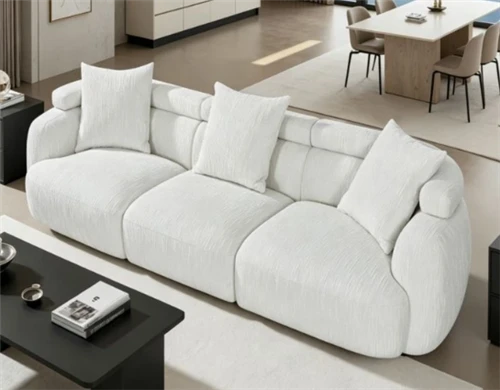
A loveseat is generally a more useful product classification than couch because it indicates a smaller seating category. However, even the term loveseat(https://www.jsc-sofa.com/modern-sofa/minimalist-sofa/neutral-color-minimalist-sofa.html) does not establish an exact width.
Similarly, a settee may be used to describe a compact traditional seating piece, but its dimensions and construction can vary significantly.
A banquette deserves special attention because it is not simply another name for a movable sofa. In hospitality projects, banquettes are often designed for restaurants, hotel dining areas, reception spaces and commercial interiors. They may be wall-fixed, floor-fixed or manufactured in sections for site installation.
For a restaurant project, ordering a banquette using only a generic sofa description can create problems with installation clearances, wall dimensions, seat heights and connection details.
A useful purchasing rule is to treat every term as a preliminary category, not as a complete product specification.
2.3 Regional Sofa Naming Differences: US, UK and Australia
The English language is not used identically across the international furniture trade. Regional differences become particularly important when manufacturers work with distributors serving several countries.
United States
In the US, both sofa and couch are widely understood. Couch is common in everyday conversation, while sofa is frequently used in furniture catalogs, product categories, specifications and professional purchasing documents.
For a US wholesale catalog, either term can work as a consumer-facing label. However, manufacturers should generally maintain one consistent technical product name throughout quotations, PIs and production records.
The US market also uses terms such as sectional sofa, sleeper sofa, loveseat and reclining sofa to distinguish specific product configurations and functions.
For example, a sectional sofa normally describes multiple seating sections arranged in an L-shape, U-shape or another connected configuration. A three-seat sofa is not automatically a sectional merely because it has three cushions.
United Kingdom
In British English, sofa is a widely recognized standard term, while settee is also used. Cambridge Dictionary specifically identifies settee as a UK synonym for sofa.
For suppliers serving British furniture retailers, using sofa in formal quotations is generally a practical choice. Settee may appear in traditional product descriptions or particular retail categories.
However, buyers should not interpret settee as an automatic indication of a smaller product. The word does not establish a standardized width, seat count or frame design.
Australia
Australian English introduces another term: lounge.
The words sofa, couch and lounge can all refer to similar upholstered seating products. Australian retail usage frequently includes terms such as lounge and lounge suite.
An Australian furniture retailer, for example, may describe a matching three-seater and two-seater combination as a lounge suite.
For exporters, this creates a simple but important distinction:
- A lounge can mean an individual upholstered seating unit.
- A lounge suite can mean a coordinated group of seating furniture.
- A lounge room refers to a room rather than a furniture product.
- A factory that interprets every Australian request for a lounge as an individual sofa could misunderstand a request for a complete matching seating set.
2.4 How Terminology Differences Affect Actual Wholesale Orders
Consider an importer supplying retailers in three markets: the United States, the United Kingdom and Australia.
The same physical product is listed as:
Three-seat couch in the US marketing catalog.
Three-seat sofa in the UK catalog.
Three-seat lounge in the Australian catalog.
There is nothing inherently wrong with this approach. Localized product names can improve catalog relevance and make product listings easier for retail customers to understand.
The problem occurs when these different names become separate product identities inside the factory's order-management system.
Imagine that the buyer uses three different descriptions in three separate purchase orders, but all three orders refer to the same factory model.
If the supplier creates three independent production records, employees may mistakenly treat them as different products. That can lead to unnecessary sample approvals, duplicated SKU records or inconsistent packaging labels.
The reverse problem is equally serious: two different products may receive the same general description.
For instance, a fixed three-seat sofa and a three-seat sleeper sofa might both appear on a PO as "three-seat couch." The supplier could overlook the sleeper mechanism requirement if the product code and functional specification are missing.
The consequences may include:
Incorrect product allocation during production.
Missing or incorrect functional components.
Carton labeling inconsistencies.
Incorrect warehouse receiving records.
Retail catalog mismatches.
Customer complaints and replacement claims.
Additional costs for inspection, rework and reshipment.
The important lesson is that product naming should be localized for marketing, but standardized for manufacturing and trade documentation.
2.5 A Practical Upholstered Seating Glossary for Hospitality Sourcing
Hospitality projects introduce additional seating terminology. Hotel operators, restaurant groups, interior designers and FF&E purchasing teams may use terms that do not appear in ordinary residential furniture orders.
|
Term |
Commercial Interpretation |
Specification to Confirm |
|
Sectional Sofa |
Seating assembled from multiple connected sections |
Module dimensions and connector type |
|
Modular Sofa |
Seating system with independently configurable units |
Compatibility, connection hardware and layout options |
|
Sleeper Sofa |
Sofa incorporating a sleeping mechanism |
Opening dimensions, mattress and mechanism |
|
Hide-a-Bed Sofa |
Sofa with a concealed pull-out or folding bed system |
Bed mechanism, mattress dimensions and access clearance |
|
Recliner Sofa |
Seating with one or more reclining positions |
Manual or powered operation and mechanism layout |
|
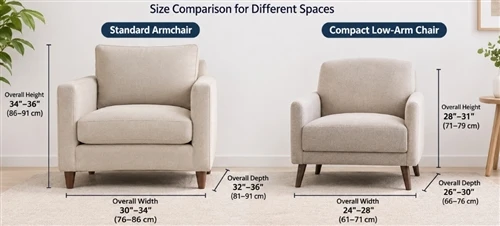
Low Armchair |
Single-person chair with relatively low arms |
Overall height, arm height and seat dimensions |
|
Banquette |
Commercial bench seating, frequently installed against a wall |
Fixing, site dimensions and upholstery requirements |
|
Settee |
Multi-person upholstered seat, often with a traditional or compact profile |
Actual capacity and physical dimensions |
The distinction between sleeper sofa and hide-a-bed sofa is worth examining.
In many retail environments, hide-a-bed is used as a product description for a sofa with a concealed sleeping function. However, the precise mechanism may differ. A pull-out metal frame, folding platform and other convertible constructions should not be treated as identical.
For wholesale buyers, the mechanism drawing, mattress specification and opening dimensions are more important than the marketing label.
This is particularly relevant for hotels and serviced apartments, where a failed sleeping mechanism can create an operational problem rather than simply a product-quality complaint.
A buyer evaluating a hide-a-bed sofa should therefore request a mechanism specification and confirm that the approved sample matches the production version.
Likewise, a low armchair is not adequately defined by its name. The buyer should specify the arm height, seat height, overall width, back height and intended placement.
This is particularly important in hospitality projects where chairs must fit under tables, align with existing furniture or comply with a project-specific furniture schedule.
2.6 Why Banquettes and Hospitality Seating Require Tighter Descriptions
A retail sofa can often be evaluated as an independent product. Hospitality furniture frequently needs to work as part of a larger architectural and operational system.
For example, a hotel restaurant may require 18 banquette sections installed along several walls. The purchasing team might use one general description, but each section could have a different length, corner orientation or backrest configuration.
If the PO identifies all units as "upholstered benches," the factory may not have sufficient information to manufacture the correct pieces.
A professional hospitality furniture schedule should identify:
- Product reference and room or zone number.
- Individual unit dimensions.
- Seat and backrest heights.
- Left-hand or right-hand corner orientation.
- Upholstery material and color code.
- Foam and support specifications.
- Leg or base construction.
- Connection and installation details.
- Applicable fire-performance requirements.
- Approved drawings and sample references.
For international projects, these details should also be aligned with the project's applicable local regulations and the client's technical requirements.
The same principle applies to low armchair selections. A low armchair specified for a hotel lobby may have a very different seat height and arm profile from one intended for a guest bedroom.
The product name establishes the category. The technical schedule establishes whether the furniture will work in the actual project.
How Wholesale Buyers Eliminate Terminology Risks on Purchase Orders
Understanding the terminology is only the first step. The real value comes from turning that understanding into a repeatable purchasing procedure.
For an importer handling multiple suppliers, product categories and destination markets, terminology control should be part of the purchasing workflow. It should not depend on whether an individual salesperson or factory representative happens to understand the buyer's preferred wording.
The following procedures are practical ways to reduce errors before production begins.
3.1 Standardize Furniture Names on PI and Quotation Sheets
The proforma invoice and quotation sheet are among the most important commercial documents in a furniture order.
They establish the commercial identity of the goods, including the product reference, agreed quantity, price and relevant specifications.
A common mistake is to use a marketing description as the only product identifier.
|
Weak Description |
Better Commercial Description |
|
Sofa |
3-Seater Fixed Fabric Sofa, Model SF-301 |
|
Couch |
2-Seater Upholstered Sofa, Model SF-202 |
|
Lounge |
3-Seater Lounge Sofa, Model SF-301 |
|
Recliner |
3-Seater Electric Reclining Sofa, Model ER-303 |
|
Bed Sofa |
Pull-Out Sleeper Sofa, Model SB-301 |
|
Corner Sofa |
Modular L-Shape Sofa, Configuration A+B+C |
The improved descriptions are more useful because they combine a recognizable product category with a configuration or functional characteristic and a model reference.
For a wholesale buyer, the model reference is particularly important. It creates a consistent connection between the commercial document and the technical records.
A recommended naming structure is:
[Product Category] + [Seat Configuration] + [Main Function] + [Upholstery] + [Model Number]
For example:
Three-Seater Electric Reclining Sofa, Fabric Upholstery, Model ER-303.
This structure is flexible enough for most upholstered seating categories.
Not every quotation needs to contain every technical detail in the product name. The purpose is to create a recognizable identity that connects to a separate, detailed specification.
A good PI or quotation should include the following fields:
|
Field |
Recommended Information |
|
Product Name |
Standardized commercial description |
|
Model Number |
Unique factory or buyer SKU |
|
Quantity |
Units ordered |
|
Dimensions |
Overall W × D × H |
|
Upholstery |
Fabric or leather reference |
|
Color |
Approved color code |
|
Configuration |
Fixed, sectional, modular or reclining |
|
Packing |
Carton quantity and packaging type |
|
Reference |
Approved drawing or sample number |
The buyer should also establish a rule that product names cannot be changed informally after the quotation has been approved.
If the buyer wants to rename a product for a particular market, the localized name should be added as a secondary description rather than replacing the factory model identity.
3.2 Use a Technical Drawing to Control Product Identity
A technical drawing is often more reliable than a written description because it communicates the actual physical configuration.
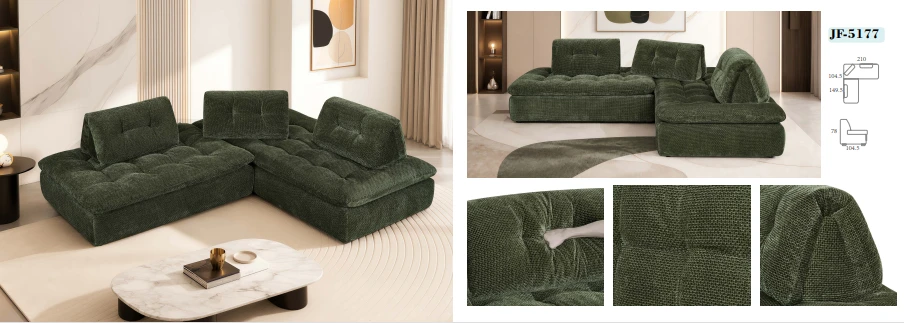
Consider an order for 80 units of a modular corner sofa.
The buyer's catalog calls the product a "large corner couch." The factory quotation describes it as an "L-shaped sectional." The production team calls it "Model MS-08."
All three descriptions could refer to the same product, but they do not establish which modules are included.
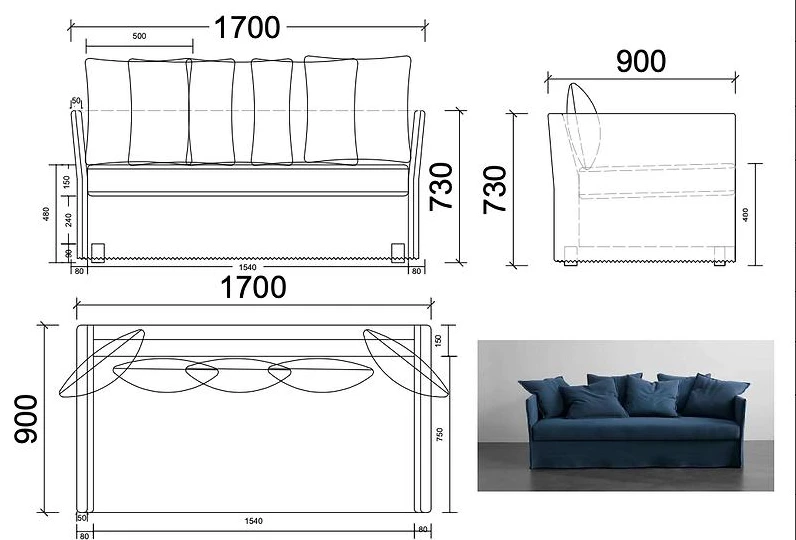
The approved drawing should show:
- Overall width and depth.
- Overall height.
- Individual module dimensions.
- Left-hand and right-hand orientation.
- Armrest position.
- Backrest configuration.
- Connection hardware.
- Leg positions.
- Cushion arrangement.
- Any detachable components.
For modular seating, a single overall dimension is not enough.
A configuration measuring 2,800 mm × 2,100 mm may contain three separate modules, but another configuration with similar overall dimensions may have four modules and different connector positions.
If the supplier produces the wrong module combination, the buyer may discover the problem only after unpacking the container.
This can be particularly expensive for retailers because incorrectly configured products may be difficult to sell as individual units.
The technical drawing should therefore carry a unique revision number and approval date. Any changes to dimensions, materials or module configuration should be recorded through a formal revision process.
Alt: Purchase order document photo
3.3 Three Common Sourcing Disputes Caused by Inconsistent Terminology
The following scenarios are illustrative composite cases based on common furniture sourcing failure modes. They are not presented as independently verified individual customer disputes. They demonstrate how apparently minor naming differences can develop into substantial commercial problems.
Case 1: The Three-Seat Sofa That Arrived as a Fixed Unit Instead of a Modular Configuration
A distributor requests a 120-piece order of three-seat corner sofas for retail distribution.
During quotation, the product is described as a three-seat sofa. The buyer assumes that the quotation refers to the modular configuration shown in the original showroom presentation.
The factory, however, interprets the description as a fixed three-seat upholstered frame.
Production follows the approved commercial description, but the buyer's intended configuration is not delivered.
The consequences may include:
- Disagreement over whether the supplier manufactured the agreed product.
- Additional costs for replacement or modification.
- Delayed retail launch dates.
- Additional warehouse handling.
- Potential return or customer compensation claims.
What should have prevented the problem?
The PO should have identified the product as a modular corner sofa, listed the individual modules and referenced the approved configuration drawing.
The buyer and supplier should also have confirmed whether the corner section was left-hand or right-hand facing.
A model number alone would not have solved the issue unless both parties had access to the same approved model specification.
Case 2: A Sleeper Sofa Was Quoted as a Conventional Sofa
A hospitality buyer requests a group of sofa beds for serviced apartments.
The initial product inquiry describes them as "three-seat sofas with sleeping function." The supplier's sales team prepares a quotation using a general sofa category.
The buyer expects a pull-out sleeping mechanism, but the factory's proposed model uses a different convertible construction.
Although both products can be described as sofa beds, their internal mechanisms, mattress arrangements and opening dimensions are not necessarily the same.
This difference affects:
- The usable sleeping surface.
- Mattress thickness and construction.
- Opening and closing clearance.
- Mechanism durability.
- Packaging dimensions.
- Service and replacement-part requirements.
What should have prevented the problem?
The buyer should have specified the exact sleeping mechanism and requested an opening diagram.
The approved sample should have been tested in both the seating and sleeping positions. The buyer should also have confirmed the mattress dimensions and the available floor clearance.
This is why terms such as sleeper sofa and hide-a-bed sofa should always be supported by functional specifications.
Case 3: An Australian Lounge Suite Was Treated as a Single Sofa
An importer sourcing furniture for an Australian retailer receives an inquiry for a lounge suite.
The supplier interprets the request as one large sofa. The buyer actually expects a coordinated furniture combination containing a three-seater, a two-seater and an armchair.
The terminology misunderstanding is not related to manufacturing quality. It is a product quantity and configuration problem.
If the mistake is identified after production, the importer may have to negotiate additional production, revise the shipping schedule or accept an incomplete range.
What should have prevented the problem?
The quotation should have listed every component separately:
One three-seater lounge sofa.
One two-seater lounge sofa.
One upholstered armchair.
The complete combination should also have been identified under one collection reference.
These examples illustrate an important commercial principle: a dispute does not necessarily begin with poor manufacturing. Sometimes the factory produces exactly what the documents describe, but the documents fail to communicate what the buyer actually intended.
3.4 Establish a Terminology Approval Process Before Mass Production
Professional buyers should introduce a terminology review into the order confirmation stage.
A practical procedure can be divided into five steps.
Step 1: Confirm the Buyer's Requested Product Category
Record the product name used in the inquiry, but do not treat it as the final manufacturing description.
Ask whether the item is a fixed sofa, modular sofa, sectional, loveseat, sleeper sofa or another specific seating category.
Step 2: Match the Name to a Factory Model
The supplier should identify the corresponding model number and confirm whether the requested product is an existing design or an OEM/ODM development.
For customized orders, a new model reference should be created when necessary.
Step 3: Confirm the Approved Technical Documents
Attach the relevant drawing, specification sheet, upholstery reference and mechanism information.
For a project order, include a furniture schedule showing the location and quantity of each item.
Step 4: Align the Commercial Documents
Check that the quotation, PI and PO contain the same model number, configuration, quantity and essential product description.
If the buyer uses a regional marketing name, include it as an additional reference rather than changing the technical identity.
Step 5: Release Production Only After Approval
The factory should receive the final approved documents. Any subsequent change should be recorded and acknowledged by both parties.
This process is particularly valuable when a buyer has several people involved in the same order, including purchasing managers, product developers, quality inspectors, freight forwarders and retail merchandising teams.
3.5 Keep Customs Descriptions Accurate and Consistent
Terminology issues can also affect international shipping documentation.
A commercial invoice, packing list and purchase order should describe the goods accurately and consistently. However, buyers should understand that a marketing product name is not necessarily the same as a customs classification.
For example, the descriptions couch, sofa and upholstered seating may all refer to the same general product. But customs classification depends on the applicable tariff rules, material composition, construction and other relevant characteristics.
The buyer should not assume that changing a product name will change its customs classification.
For US imports, the importer of record remains responsible for ensuring that the goods are correctly declared under the applicable Harmonized Tariff Schedule classification.
The practical approach is to maintain two related but distinct records:
A commercial product description that clearly identifies the furniture.
The correct customs classification and supporting product information required for import entry.
When necessary, the importer should confirm classification with a qualified customs broker or obtain a binding ruling from the relevant customs authority.
Consistency across documents also makes it easier to investigate discrepancies during receiving inspections.
If the packing list identifies Model SF-301 as a three-seat fabric sofa, but the carton label identifies it as a two-seat couch, the warehouse team has an immediate reason to investigate before accepting the goods into inventory.
3.6 Create a Factory Sample and Labeling Reference System
Product names should not be controlled only through documents. They should also be connected to physical samples and factory identification.
A practical factory sample area should display:
- Product model number.
- Standard commercial name.
- Approved dimensions.
- Upholstery reference.
- Frame construction.
- Functional characteristics.
- Approved sample status.
- Drawing revision.
- Buyer or project reference.
This helps production workers, QC inspectors and packing personnel identify the correct product without interpreting informal terminology.
For example, a factory may display three visually similar products:
- SF-301: Three-seat fixed fabric sofa.
- SF-302: Three-seat manual recliner sofa.
- SF-303: Three-seat electric recliner sofa.
All three may look similar when photographed from the front. Their internal structures and functional components, however, are significantly different.
A clear identification system reduces the risk of using the wrong frame, mechanism or carton label.
3.7 Standardize Terminology Across Catalogs, Quotations and Cartons
The final step is to establish one product identity across the entire supply chain.
A product can have different marketing descriptions for different destination markets, but the internal SKU and model number should remain unchanged.
For example:
|
Document or Platform |
Recommended Product Identity |
|
US Retail Catalog |
Three-Seat Couch |
|
UK Retail Catalog |
Three-Seat Sofa |
|
Australian Retail Catalog |
Three-Seat Lounge |
|
Factory Quotation |
Three-Seater Upholstered Sofa, SF-301 |
|
Proforma Invoice |
SF-301, Three-Seater Upholstered Sofa |
|
Purchase Order |
SF-301 + Approved Specification |
|
Factory Production Sheet |
SF-301, Drawing Revision 03 |
|
Carton Label |
SF-301, Carton 1 of 2 |
|
Packing List |
SF-301, Three-Seater Upholstered Sofa |
This approach preserves local marketing language without creating multiple identities for the same product.
It also makes it easier to manage repeat orders. When a buyer reorders the same product six months later, the supplier can retrieve the approved model and its specifications rather than relying on an old email description.
For buyers managing large furniture catalogs, this process can be supported by a centralized product master database.
Each product record should contain:
- Unique SKU.
- Standardized English name.
- Regional marketing names.
- Product category.
- Approved technical drawing.
- Dimensions and weight.
- Material specifications.
- Packaging specifications.
- Compliance documentation where applicable.
- Sample approval record.
- Revision history.
This is especially useful for wholesalers importing products from several manufacturers, as it creates a common classification system across suppliers.
Alt: Printed furniture catalog page
Conclusion: Drawings and Dimensions Always Outweigh Simple Word Labels
The words sofa, couch, loveseat, settee and lounge may describe similar types of upholstered seating, but they do not always communicate the same commercial requirements.
For international furniture buyers, the challenge is not deciding which word is linguistically correct. It is ensuring that the buyer, factory, purchasing team, quality inspector and logistics provider all understand exactly which product is being ordered.
The key takeaways are:
Understand the terminology: Sofa and couch are frequently interchangeable in modern English, while settee and lounge have stronger regional associations.
Recognize regional differences: US, UK and Australian buyers may use different names for similar upholstered seating products.
Separate marketing names from technical identities: A localized retail description should never replace the factory model number.
Use drawings and dimensions: Approved technical drawings, module configurations and functional specifications provide more reliable product identification than simple word labels.
Standardize commercial documentation: Quotations, PIs, POs, production sheets, carton labels and packing lists should reference the same product identity.
Document changes: Any adjustment to dimensions, mechanisms, materials or configurations should be approved and recorded before production.
For international furniture manufacturers, clear terminology is an important part of effective buyer-factory communication. For importers and wholesalers, it is a practical method of reducing purchasing risk.
Ultimately, a product name tells the factory what category of furniture to consider. An approved drawing, specification sheet and model reference tell the factory exactly what to manufacture.
Sources
Merriam-Webster Dictionary - Sofa: Definition and Etymology. Reference for the modern meaning and historical development of the word. https://www.merriam-webster.com/
Oxford Advanced Learner's Dictionary - Sofa. Definition, synonyms and word origin, including the French and Arabic linguistic connection. https://www.oxfordlearnersdictionaries.com/us/definition/english/sofa
Cambridge Dictionary - Sofa and Settee. Definitions and regional usage distinctions between sofa, couch and settee. https://dictionary.cambridge.org/dictionary/english/sofa
Getty Research Institute - Art & Architecture Thesaurus: Sofas. A specialized furniture classification reference distinguishing sofas from certain types of reclining couches. https://www.getty.edu/research/tools/vocabularies/aat/
Online Etymology Dictionary - Sofa. Historical development of the word, including its earlier meaning and recorded use in English. https://www.etymonline.com/word/sofa
Cambridge Dictionary - Settee. Reference for British English usage and its relationship to sofa. https://dictionary.cambridge.org/dictionary/english/settee
International Interior Design Association (IIDA) - What Is Interior Design? Professional background on interior design practice and commercial interior environments. This is not a dedicated upholstered seating glossary. https://iida.org/about/what-is-interior-design
Australian Dictionary - Lounge. Reference for Australian English usage of lounge as a term for a sofa or couch. https://australiandictionary.org/lounge