

New Leather Sofa Collection Trends for 2026
For furniture importers and wholesalers, launching a new sofa assortment is never just a design decision. A model can look excellent in a showroom and still become slow-moving inventory six months later if the silhouette is too market-specific, the leather specification is unclear, or the price does not match the target channel.
From a factory and export-supply perspective, these problems usually appear before mass production starts. The warning signs are often visible during product selection, leather approval, sample development, and order planning. Buyers who review these stages carefully can reduce inventory risk while building a collection that is easier for local retailers and distributors to sell.
At JSC Furniture, we work with overseas buyers on leather sofa development, OEM production, sampling, quality control, and container planning. Based on this factory-side experience, our approach to a new leather sofa collection is simple: do not select products only because they look fashionable. Evaluate whether the design, leather, construction, packaging, target price, and local market positioning can work together.
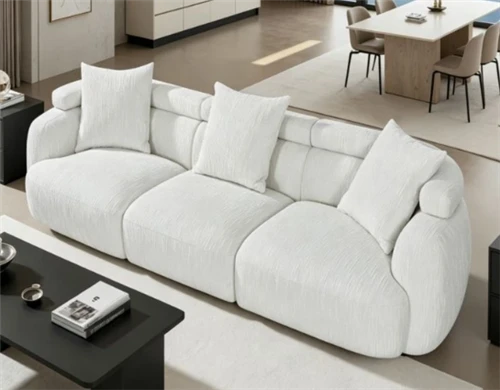
For 2026, several directions deserve particular attention. Softer silhouettes, warmer leather colors, more refined proportions, flexible modular formats, and visible material character are becoming important design signals. But for importers, the commercial question is more practical: which of these trends can generate repeat orders without creating unnecessary SKU or inventory risk?
This guide breaks down the key considerations from a wholesale sourcing perspective.

1. 2026 leather sofa trends for importers
The most useful way to read furniture trends is not to ask, "What is the hottest sofa this year?" Instead, ask, "Which design direction can remain commercially relevant long enough for my inventory cycle?"
A wholesaler may purchase a container today, receive it several months later, and then need additional time to sell through the stock. That means a design selected purely because it is highly visible on social media can become a risky purchase if its appeal is too narrow.
For 2026, the market is showing a broader movement toward softer shapes, warmer colors, tactile surfaces, and furniture that feels comfortable without looking oversized. Current furniture trend coverage also points toward organic curves, richer wood tones, earthy colors, and more intentional furniture proportions. For importers, these trends are useful signals rather than guarantees of sales. The final decision should still be based on the buyer's own market, customer profile, and sales channel.
Lower-profile designs need careful market positioning
Another direction worth monitoring is the move toward cleaner, lower-profile sofa proportions.
The challenge for importers is that "low profile" does not automatically mean "better design." The commercial value depends on whether the proportions fit the target market.
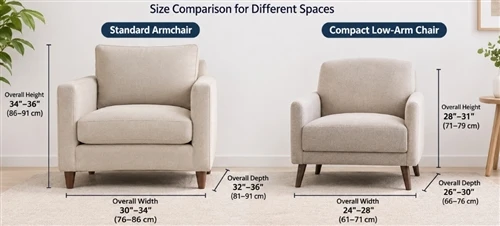
A very low sofa may work well in design-led urban interiors but may not satisfy buyers who prioritize easier sitting and standing. Likewise, an extremely deep seat can look luxurious in photographs while creating practical problems for smaller living rooms.
For wholesale purchasing, the better question is whether the sofa provides enough visual distinction while retaining broad usability.
When evaluating a sample, ask:
Does the seat height le, ask:suit the target market?
Is the seat depth comfortable for the intended customer?
Can the sofa fit standard room layouts?
Does the silhouette remain attractive when viewed from the side?
Can the model be produced consistently at container quantities?
Does the design justify its intended wholesale price?
These questions turn a trend into a purchasing decision.
Modular and flexible formats can reduce assortment risk
Molecularity is another direction worth considering because it connects design with logistics.
A modular sofa can allow buyers to offer different configurations without developing completely separate product platforms. For example, a collection may include a standard sofa, sectional configuration, chaise combination, or additional corner unit based on a common design language.
This can be particularly useful for distributors serving customers with different room sizes.
However, Molecularity also introduces additional QC points. Connectors need to align correctly, modules must maintain consistent dimensions, and the visual relationship between separate units needs to remain accurate.
From the factory side, this is why modular products should be evaluated as a system rather than as individual pieces.
Material character is becoming part of the selling proposition
In 2026, buyers should also pay closer attention to leather surface character.
A completely uniform finish can offer excellent consistency and predictable appearance, while a more natural-looking finish may provide stronger visual character and a premium impression. Neither is automatically superior for every market.
The right choice depends on the retail positioning.
For a high-volume program where consistency and price control are priorities, a corrected or more uniform leather finish may be easier to manage. For a premium collection where natural grain variation is part of the story, a higher-grade leather with visible character may create more perceived value.
The key is to make sure the material story matches the actual specification.
A buyer should never approve a leather sofa based only on the words "premium leather." The purchasing specification should identify the actual material category, surface treatment, color standard, and intended upholstery areas.
2. wholesale leather sofa collection sourcing tips
Once a buyer has identified the right design direction, the next challenge is translating a showroom sample into a repeatable production specification.
This is where many sourcing problems begin.
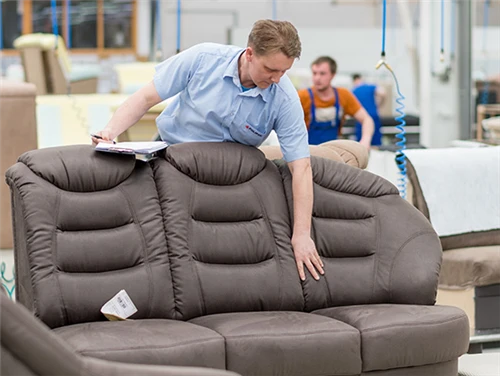
A sofa may look correct in a sample room but change during mass production because the leather selection, cutting method, foam specification, stitching details, or frame construction was not clearly documented.
At JSC Furniture, we treat sample approval as the beginning of production control rather than the end of product development.
Start with the target market, not the factory catalog
One of the most common purchasing mistakes is selecting products from a supplier catalog first and trying to find a market for them later.
A better approach is to define the target market before selecting the final assortment.
A U.S. furniture distributor, for example, may prioritize generous seating, practical configurations, and familiar dimensions. A European importer may place greater emphasis on compact proportions, refined silhouettes, and apartment-friendly layouts. A hospitality buyer may prioritize durability, compliance documentation, cleaning requirements, and replacement consistency.
The same frame concept can therefore require different specifications depending on the end-use channel.
Before requesting samples, buyers should define:
Target retail positioning
Expected wholesale price
Primary sales channel
Typical room size
Preferred sofa dimensions
Desired leather category
Required certifications or compliance documents
Packaging and container requirements
Expected annual purchasing volume
This information allows the factory to recommend a more appropriate construction rather than simply quoting an existing model.
Verify leather by specification, not terminology
Leather terminology can create unnecessary confusion.
Terms such as full grain, top grain, corrected grain, split leather, genuine leather, and bonded leather describe different materials or processing approaches. However, terminology is not always used consistently across suppliers and markets.
For B2B procurement, the important point is to create a written material specification.
Ask the supplier to confirm:
The leather type and construction.
Which sofa surfaces use the specified leather.
Whether non-contact areas use another material.
The approximate leather thickness.
Surface finishing or embossing treatment.
Color reference or approved swatch.
Grain and texture expectations.
Colorfastness and other applicable test requirements.
Thickness alone should not be treated as a complete measure of leather quality, but it can help buyers compare specifications more objectively. More importantly, buyers should compare physical samples rather than making decisions from photographs.
A leather swatch should be reviewed under different lighting conditions. Check flexibility, surface feel, grain consistency, color, finish, and how the material reacts when bent or lightly stretched.
If the final sofa uses a different leather from the approved sample, the buyer may end up with a product that technically follows the same model number but does not deliver the same market positioning.
Confirm where genuine leather is actually used
Another practical issue is leather coverage.
A sofa may be marketed as a leather sofa while different materials are used on different parts of the product. Depending on the specification, the seating surfaces, back, sides, or hidden areas may not all use the same material.
This is not necessarily a problem. It becomes a problem when the buyer does not know the construction.
For wholesale purchasing, the material map should be documented.
Specify which areas require the approved leather and which areas, if any, can use matching synthetic material or another upholstery solution.
This protects both sides from misunderstandings and makes the final cost easier to evaluate.
Sample approval should include construction details
A good pre-production sample review should go beyond color and appearance.
Inspect the frame alignment, stitching, seam placement, cushion fit, seat height, arm symmetry, backrest angle, leg installation, and overall dimensions.
Measure the critical points.
Do not rely on "looks about right."
For repeat orders, create an approved sample or golden sample with a written specification sheet. If a production team changes foam, leather, stitching, hardware, or dimensions later, the approved reference gives the QC team something concrete to compare against.
This is particularly important when the buyer is ordering several container loads over a long period.
Evaluate leather and design together
Leather selection and sofa design should not be treated as separate decisions.
A sharp, minimal frame may benefit from a clean and consistent leather surface. A softer, more relaxed silhouette may work better with a leather finish that shows more natural character.
Likewise, heavily curved areas can place greater demands on leather cutting and upholstery workmanship.
Ask the factory to produce the actual upholstery construction rather than approving a leather swatch independently from the sofa.
The commercial objective is not simply to purchase better leather. It is to achieve the right balance between appearance, performance, cost, and market positioning.
3. import leather sofa collection order planning
After product selection and sample approval, the next risk is ordering the wrong quantity.
For importers, inventory risk often comes from buying too many variations too early.
A large assortment may look impressive in a catalog, but every additional SKU creates forecasting, warehouse, packaging, QC, and after-sales complexity.
The objective should be to build a collection that is broad enough to serve the market but controlled enough to manage inventory.
Plan container loading early
Container planning should begin during product development, not immediately before shipment.
The dimensions of a sofa influence how many units can be loaded. Packaging design, knock-down construction, Molecularity, and carton configuration can all affect shipping efficiency.
A product that appears competitive at factory price may become less attractive once freight cost per salable unit is calculated.
When developing a new model, ask the factory for estimated packed dimensions and loading quantities early.
For larger wholesale programs, also consider whether several models can share a container efficiently.
A balanced container may be commercially more useful than a container filled with one fashionable model that has uncertain demand.
Establish a pre-production approval process
Before mass production begins, confirm the final specification in writing.
The approval package should ideally include:
Final product drawings or dimensions
Approved leather swatches
Approved color references
Frame and construction specification
Foam or filling specification where relevant
Stitching requirements
Hardware and leg specification
Packaging method
Carton markings
Assembly instructions
Approved sample photographs
QC inspection requirements
This documentation reduces ambiguity between purchasing, factory production, and inspection teams.
For repeat orders, the same specification can be used as the baseline for consistency.
Use inspection checkpoints instead of relying only on final QC
Final inspection is important, but it should not be the only quality-control stage.
A practical production-control process can include raw-material verification, frame inspection, ore-upholstery inspection, upholstery inspection, assembly inspection, and final random inspection.
For leather sofas, QC should pay particular attention to visible leather surfaces, color consistency, grain direction, stitching, seam alignment, wrinkles, panel matching, cushion dimensions, and overall symmetry.
The buyer should also define acceptable variation.
Natural leather may contain variation that is expected and acceptable. The QC team therefore needs a clear standard separating natural characteristics from actual defects.
Without this distinction, buyers can face unnecessary disputes during inspection.
Sampling speed matters when testing a trend
One of the biggest advantages of working with an experienced manufacturer is the ability to shorten the gap between design concept and physical sample.
For trend-sensitive products, a long sampling cycle can reduce the commercial value of a new design. By the time the buyer receives a sample, reviews it, requests revisions, and approves production, the selling season may have changed.
A more efficient process is to prepare a clear technical brief before sampling.
Include reference images, target dimensions, leather direction, seat comfort requirements, preferred color, packaging expectations, and target market.
The more specific the initial brief, the fewer unnecessary revision cycles are likely to occur.
Keep the 2026 trend strategy commercially balanced
The biggest mistake importers can make with 2026 trends is chasing every trend at once.
Curves, warm browns, sculptural proportions, modular layouts, natural-looking leather, and premium detailing can all be interesting. But combining every trend into one product may produce something visually complicated and difficult to sell.
Instead, select one or two trend signals and connect them with a commercially proven foundation.
For example:
A conventional sofa frame can receive a softer arm profile.
A proven two-seater can be offered in a warm cognac leather option.
A successful sectional platform can be extended with modular components.
A classic silhouette can be upgraded through better leather and refined stitching rather than a completely new frame.
This approach reduces development risk while still giving the assortment a current 2026 appearance.
Final Take away
For 2026, successful leather sofa sourcing is less about finding one "hot" design and more about building a balanced product strategy.
The strongest wholesale opportunities are likely to come from designs that combine current visual cues with practical proportions, controlled production complexity, appropriate leather specifications, and clear market positioning. Warm colors and softer forms can refresh an assortment, but they should be introduced with the same discipline used for any other commercial SKU.
From our perspective as a sofa manufacturer serving overseas buyers, the most reliable selection process starts with the market and ends with production repeatability.
First, identify the customer and price segment. Then select the silhouette. Next, verify the leather physically and document the specification. After that, approve the sample, calculate packaging and container efficiency, establish QC standards, and only then finalize the initial order quantity.
If you are building a new 2026 assortment, review our latest leather sofa collection to compare current designs and identify models suitable for further wholesale development.
For buyers looking for a broader range of factory-direct options, our wholesale leather sofa collection can also be used as a starting point for discussing colors, materials, dimensions, configurations, OEM requirements, and target-market positioning.
And if your next purchasing program requires a customized import leather sofa collection, the most efficient approach is to share your target market, expected price level, preferred leather specification, estimated quantity, and required delivery window with the factory before sampling.
A good 2026 sofa assortment should not simply look new. It should be easier to sell, easier to reproduce, easier to inspect, and easier to reorder.